
Back to the Storyboard
Narratival Awareness on the Path to Freedom and Agency

Introduction
Why is the world the way it is? What forces shape its trajectory? “Who,” if anyone, rules the world?
Is it the American Empire? Borderless corporate conglomerates? Shadowy cabals?
Or is the very question itself naive and misleading, obscuring systemic or chaotic dynamics that are, at this point, beyond the reach of human influence? Is the world, in this light, out of control?
Regardless of one’s theory for the distribution of power and influence in the human world—be it ‘conspiratorial,’ ‘systemic,’ or otherwise—one misunderstanding is easily dismissed: People do not rule the world. How could they? They can’t. People are, themselves, ruled by ideas.
Psychoanalyst-turned-cultural-lightning-rod Jordan B. Peterson credited Carl Jung with the insight, “People don’t have ideas. Ideas have people.” And while the relationship between people and ideas may be more bidirectional (and is certainly more nuanced) than this statement suggests, it nonetheless foregrounds the key piece missing or misunderstood in contemporary cultural discourse.
Ideas aren’t abstract figments unrelated to daily life; we cannot contrast ideas with ‘down-to-earth practicality.’ Ideas form the frames through which we interpret Reality.
And the ideas rattling around in our heads aren’t vague, structureless blobs. We retell them to ourselves internally in the same form we would use to communicate them to others—as stories. (Therefore, and for simplicity, we’ll use ‘ideas’ and ‘stories’ mostly interchangeably in this piece.)
Our exploration begins with a simple yet profound premise: Human beings experience the world through frames made of ideas; we don’t just tell stories; we are drawn into them and often get lost within their folds.
Stories shape how we interpret our perceptions. They act as an interpretive grid—an intermediary layer between objective events and facts and our subjective experience of them. As a result, we don’t only react to events; we respond according to the stories we tell ourselves about them. In this sense, ideas—or stories—govern humanity.
Ideas make up the human world. Stories govern people. Is this not a monumental insight?
And though some would argue that it is not a particularly novel insight, it remains one that culture has not been able to fully digest; this insight remains primed to shake the foundations of the human world, remaking it in the process.
This short piece is a prelude to upcoming essays about the maturation of the human-story relationship. We will explore how this relationship is pivotal to the survival and future of the human race and the rest of life on Earth. But before we publish such sensitive, explosive essays, we wish to make a first pass to emphasize the significance of the territory they traverse. Hence this prelude—the actual reason why our culture does not encourage us to ‘philosophize’ about fundamental issues is not that the process is detached from practicality but that it is dangerous. Human societies throughout known history have based their stability on the unexamined normative assumptions their people took for granted.
Therefore, while this short piece is just a prelude, it is a self-standing piece, as here we will claim that increasing awareness of the ‘narratival’1 dimension of human existence is, in itself, a top priority for our species. Only by first grounding the discussion in its gravity and risks will we be ready to deliberate on how to approach its subject matter.
Ideas frame our perception of the world, both individually and collectively. These ideas are passed around as stories.2 Therefore, stories, or ideas, are the underlying driving forces shaping the human world.
How do we navigate this realization? Is it stupendous or downright obvious? Is it so radically consequential that it flips into utter inconsequentiality, having no practical implications or utility? This largely depends on one’s approach.
Going Meta
This is a meta-conversation—one that lifts our attention above the all-consuming contents of public discourse, freeing us to examine its (largely dysfunctional) underlying dynamics. As we will see, when things appear intractable, ‘going meta’ reveals pathways for change.
Going meta grants us objective distance. An idea that we objectify and a story we are fused with are two completely different things.
Perceiving from within the story, it is axiomatically taken for granted and cannot be challenged. The more we generalize our objective stance, the clearer we can see how ideas lodge themselves into people, shaping their identities and narratival interpretations. This fusion of person and idea creates an unconscious chimera that characterizes most of human history.
If we do not understand the role ideas play in defining our perceptions, we will remain played by them. Our culture, as a whole, is far from confronting its own entanglement with stories (more on this later). What can be done about this seemingly intractable situation?
We need better ways of relating to stories through a mature theory of ideas—a meta-narrative (more below)—and, critically, a lived awareness of our entanglement with stories.
The more we disentangle from stories, the clearer we can see both—ideas and human beings—for what they truly are. We are typically so enmeshed in our stories that it is difficult to tell where a person ends and their stories (about themselves and the world) begin.
Ideas Rule The World
Ideas are not inert—they are psychoactive. They move people and move through people, shaping actions and outcomes. By looking at ideas objectively, we can see them utilizing their adherents as fungible pieces on a game board as if they were independent lifeforms with their own intelligence and volition.3 Ideas attempt to move from an abstract notion to a fact made manifest (more on this in future essays).
Different ideas are often incompatible—so much so that they even engage in narratival warfare—story wars—the hidden engine behind all human conflict. Every war begins as a clash of incompatible stories.4
This tangled situation calls us to take the public discourse ‘metaward.’5 Only by moving metaward can we disentangle from stories and shift them from subconscious forces shaping our subjectivity to conscious objects of examination.
We must navigate this terrain with an appropriate sense of urgency, balancing it with humility and care. The stakes are unprecedentedly high, given our newfound technological levers of power. (Remember, kids: never mix large levers of power with bad ideas!)6
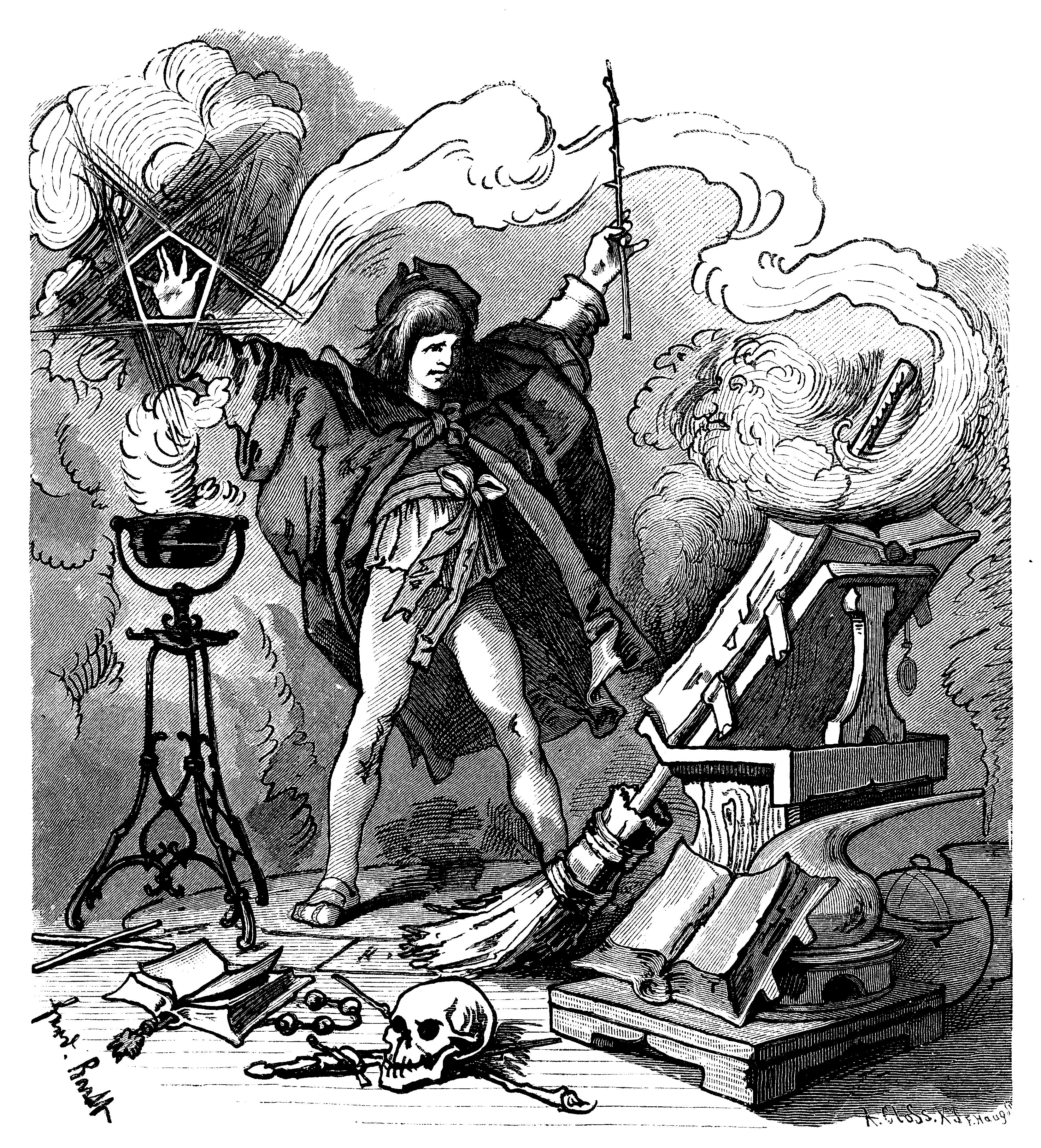
Is humanity’s story doomed to enact an epically tragic retelling of Goethe’s Sorcerer’s Apprentice? Not only our physical technologies (autonomous, IoT, broom-wielding drones?) but the very stories that shape our world now threaten to spin out of our control.
What will happen if we passively allow the simplistic, unexamined ideas that dominate and govern modern culture and society to unfold unabated? Are events truly beyond our control?
We may be entangled with stories, but—miraculously—our relationship with them can evolve. In this truth flickers a faint ember of hope for our species. Let us stoke it to a blazing fire of clarity, for there is much confusion to burn through.
The Existential Dimension of Story
Human beings perceive reality through an interpretive lens. We cannot access ‘raw’ objective Reality without filtering it down to something more manageable.7 These frames are based on the narratives we inhabit and, in turn, shape how we act in the world.
Unlike animals, who react instinctively to their circumstances and are, therefore, roughly speaking, predictable, this interpretive layer between event and response makes a ‘human animal’ predictable only to the extent that we ‘know what their story is.’8 Behaviorally, human beings are defined by their stories, creating subcategories within the human kingdom distinguishable by stories (or so-called ‘memeplexes’). A ‘human animal’ shaped by one story may result in a predator; another, shaped by a different story (or the other end of the same story), becomes their prey.
The transparent nature of this interpretive layer—the seamlessness with which narratives frame our perceptions—leaves most people oblivious to it. Couple this seamlessness with the ‘herd effect’ of a whole social network that corroborates one’s stories, and we can see why this existential layer typically remains under the radar. A few intentional moves or even a revelation of sorts is necessary to see the filter itself rather than seeing through it. The mere possibility of this shift is tremendously important.
In a previous essay—Thinking in Color—we argued that emotional intelligence is a prerequisite for free thought. (Keep in mind: genuine independent thinking is not easy. It is a rare exception, not the norm.) We explored how ignoring or avoiding emotions does not free us from their influence (but the opposite). Emotions are a baked-in existential aspect of the human experience that we can be more or less aware of and skillful with. Emotional awareness presents the potential for emotional intelligence, which, in turn, discloses the potential (and grave responsibility) for free thought.
Similarly, ignorance of the workings of narratives, another existential dimension of the human experience, does not free one from their influence. Just as ignorance of laws of the state does not exempt one from the socially enforced consequences of breaking them, and much more fundamentally, we are all subject to the ‘laws’ of human nature, ignorance notwithstanding.
On the flip side, increased awareness opens up previously unavailable options. This short preliminary piece means to raise awareness of the narratival dimension of the human experience, laying the groundwork for a discussion about navigating the recognition of this existential dimension through a new meta-narrative. We aim to make practical and accessible what has thus far been relegated to a curiosity at the fringes of cultural discourse, kept for the eyes of philosophers and other explorers of the human potential.
We must understand the situation on the planet through a new lens: The ‘meta’ lens of ideas. Through the process, a clearer picture of the human condition begins to reveal itself as we can better see people qua people and stories qua stories. This enables us to begin decoupling ideas and human beings. We can find compassion and understanding for all those ‘poor saps’ that have been ‘indoctrinated’ (i.e., enculturated) into paradigms we happen to find distasteful or problematic.
For the first time in known history, the capacities we are discussing are essential for our species’ survival, as humanity is woefully underequipped for making sense of postmodernity’s chaotic narratival landscape and unprepared for wielding modernity’s absurd technologies, leaving civilization’s helm unmanned and allowing humanity’s future to unfold according to sheer, blind social momentum.
And so, how do we increase our awareness of the narratival existential dimension of human experience? Along two interweaving lines—theory and practice.
Theory
A theory in this domain serves as a model for understanding the nature of ideas and our relationship with them.
This inquiry is far from new to Western thought. Thinkers from Plato and Kant to Hegel, Marx, Nietzsche, Jung, Kuhn, and Foucault, among many others, have wrestled with the nature of ideas and how they shape the human world. These thinkers form part of a long-standing debate: Do ideas exist independently from us as some non-physical self-standing entities or things, or are they merely artificial human-made constructs—all in our heads?
A theory about ideas—which is itself an idea—shapes how we relate to all ideas. Different theories lead to different attitudes and approaches. Just as our stories about things govern how we relate to them, stories about stories govern how we relate to all stories—categorically.
Therefore, these theories have far-reaching implications, affecting how and why people and cultures adopt some ideas and relinquish or dismiss others. For example, according to Plato’s theory of forms, one would strive to discover ideas in their unadulterated purity through philosophical inquiry. In contrast, according to contemporary postmodern thought, ideas are artificial constructs of persuasion and control and can be dismissed (or cynically weaponized) as such.
A theory is, itself, just an idea—a story we tell about how some aspect of Reality works. Therefore, a theory about ideas is nothing more or less than a story about stories—a meta-story or a meta-narrative. The right meta-narrative can lead to increased meta-awareness of stories and advanced forms of agency.
The terms ‘meta-narrative’ and ‘grand narrative’ (or master narrative) are often used interchangeably, but they serve distinct purposes in our exploration. A grand narrative is the overarching story of a culture, whereas a meta-narrative is a theory about ideas—a story about stories.
Grand Narratives
The difference between an ordinary narrative and a grand narrative is quantitative, not qualitative; a grand narrative is a narrative on a grand scale. It is a narrative for collectives—whole societies and cultures. It frames our understanding of the flow of history from the past and charts a path for society into the future, just as personal narratives do for individuals.
Stories can be more or less grand in this sense. Narratives are nested within one another, like a ‘narrative matryoshka,’ with grander stories providing context for ‘smaller’ ones. The story of a day fits within the story of a life, which, in turn, fits within broader cultural narratives—like branches growing from a larger trunk on a ‘narratival tree.’
In premodern history, distant societies could have separate narratival silos of grand narrative arcs. Today, globalization has entangled our narratives, creating a more interconnected and, on the grander strata, hegemonic, narratival landscape.
A grand narrative is sometimes referred to as a culture’s collective dream. The dream metaphor is especially apt in those situations where people and cultures ‘fall asleep’ into unexamined narratives. This happens when we, personally or collectively, relinquish the responsibility for self-reflective thought and meta-awareness of our narratival frames, thereby taking our stories for granted.
‘Waking up’ from unexamined stories co-arises with a meta-awareness of their nature. This brings us to discuss how we relate to our stories—through our stories about our stories.
Meta-Narratives
Everyone, whether consciously or not, operates under meta-narratival assumptions. Even the basic assumption—“I (or my tribe) am right; those who disagree are wrong and ignorant”—functions as an implicit meta-narrative, defining one’s relationships to all stories.
Once one encounters differences in understanding with others, one must have a meta-narrative, even a subconscious and implicit one, to explain (or explain away) plurality. And even before this inevitable encounter with difference, one’s implicit meta-narrative is even more primordial: “Everyone sees the same world as I do.”
Implicit or explicit, our meta-narratives define our relationship to stories. They determine whether we are rigid or malleable and how and why (and if) we listen to others and their stories.
If we need (individually and collectively) stories that are appropriate to our current situation and that guide us toward a future worth having, we must first establish a meta-narrative that enables us to examine and move toward these better stories intentionally and skillfully instead of blindly and arbitrarily.
In the following essay, we will explore the dominant contemporary meta- and grand narratives that run society and are currently directing the future of our species: the grand narrative of modernism (‘objective’ progress) and the meta-narrative of postmodernism (subjective relativism).9 We will explore their fatal flaws and weave an evolving ‘post-postmodern’ meta-narrative that moves beyond both.1011
Cascading Implications
If stories are the driving forces shaping the human world, shouldn’t investigating their nature and limits be a top priority for us all? By investigating stories at their root, we move beyond surface symptoms to address the deeper causes shaping human society and culture.
We have inherited stories—breathing them like air, moving in an atmosphere of narratives that predate us. Should we continue to ignore them as background noise? Can we afford to?
Are stories merely human inventions—arbitrary fictions detached from reality?
Where do the ideas and stories that govern our world come from? More importantly, are they true? If not, are they tools of manipulation or simply the honest but premature conclusions of previous generations? Perhaps they only contain fragments of truth, requiring careful discernment to tease apart?
If stories are what the human world is made of, is there a case to be made for preserving social stability by not criticizing or examining them too closely? Too openly?
Who decides which stories guide society? Is there a person, a group—a rightful architect of narratives? If stories shape the future of our species, who among us can claim the terrifying responsibility of crafting them?
Is the political class of the United States of America, for instance, elected to determine how we should perceive the world? Or are those who amass clout and wealth, self-selected through Machiavellian aptitude, somehow entitled or well-suited to frame humanity’s historical moment? Are the technocrats and elites not themselves entangled with stories and lack a mature meta-narrative to disentangle themselves from these, just like the masses they seek to control and manage? Or academia? Or ‘science?’
Are there groups or perhaps even impersonal forces in society that benefit from the current stories, and others who are the losers and villains in these stories? History is written by the winners, as they say. Would these winners, whether groups, persons, or impersonal forces, not strive to keep their stories hegemonious and unexamined?
Many difficult questions arise, and the future remains in flux, but a key missing ingredient is taking shape, readying to set the plot in motion.
We need an apt meta-narrative to navigate the ocean of stories and the violent torrents ahead—the cascading consequences of unexamined narratives. If we are facing miserable decades of chaos and collapse ahead of us, these must be understood as the reverberations of humanity’s own choices, made and justified within the frameworks of partial, problematic, and unexamined stories.
That said, theory alone will not save us. While a mature meta-narrative can reframe our relationship to stories and ideas, we are psychologically and emotionally entangled with them. These frames define our identities and our perception of the world. If we were to try to theorize our way out of the hard work of disentanglement ahead, we would, ironically, get entangled with one more misconception. What is called for is one thing above all else.
Intentional Practice
Grand narratives are a breeze to spot in others—individuals or groups—and meta-narratives are easy to discuss from a safe theoretical distance. The real challenge lies in teasing out the narratives we, ourselves, are entangled with.
Stories mold our thoughts, a process that happens seamlessly and nearly instantly. To learn how this works within ourselves, we must become increasingly aware of our stream of thoughts. We are called to cultivate the capacity to step back from our thoughts to witness them objectively.
Our thoughts emerge from the stories we inhabit and reinforce them (AKA ‘confirmation bias’). We need to increase our awareness of and objective distance from the content of our minds and tease out the narratival patterns. A proactive approach using inquiry tools such as mindfulness, meditation, and journaling is essential for breaking free from our narratival loops. These are essential power tools with which we move from passive immersion to reflective awareness—a slow, arduous, and life-changing process.
Through such inquiry, we can begin to disentangle from stories. With sustained effort, by ‘racking up small victories,’ our relationship toward all stories and the content of our verbal narrating mind matures. Liberation from being defined by unexamined stories marks a tectonic developmental shift in one’s whole being.
Mindfulness is indispensable. It cultivates metacognition, a self-reflective awareness of our interiority. Without examining our thoughts, words, and actions, how can we hope to recognize the stories we live in and by?
An explicit meta-narrative is fundamental to a more sophisticated attitude toward our inner narration than simply taking it at face value—unreflectively believing the content of the mind.
What is our theoretical meta-narrative serving if we do not witness and evolve our relationship toward our inner narration? And what would our theory be based on but speculation? And where would one who examines and deconstructs their narratival complexes be going, exactly, with no higher-order logic to inform the process? Collapsing into one story after disentangling from another, perhaps?
Theory must inform practice, and vice versa.
However, even as we attain our small, personal liberation from unexamined stories, the question remains: Can this liberation ‘scale?’ And what would a human society that has metabolized this insight even look like? Is a society with a mature human-story relationship even imaginable from where we are? In such a society, humanity will be shaping its own social destiny, whereas humanity today is still like pawns for ‘grander’ forces.
End of the Beginning
This piece serves as a prelude—foregrounding a world-changing yet culturally undigested insight. Humans are “story-telling apes.”12 We live within the stories we inherited and continue to tell one another.
Reckoning with this insight culturally and socially demands unprecedented skill, care, and proactive participation of all who can hear the call.
This insight may seem like old news in postmodern circles, but it remains unripe and indigestible in its postmodern form. Contemporary culture has yet to attain a mature meta-narrative with which we can approach our narratival entanglement with agency and skill.
We need a meta-narrative that is up to the task and will help us navigate the stormy seas ahead.
This territory demands the utmost care. Ideas and stories shape our world—both individually and collectively. Changing how we relate to them is as perilous as it is promising. Alongside the theoretical debate, we must cultivate intentional practices to find a way to climb down from our own unexamined narratival trees.
The alternative? Our stories continue to clash as we destroy ourselves—and our planet—as zealots, ideologues, and dogmatic followers of narratives we were never equipped to examine and navigate—have never seen but have only seen through.
We have outlined the territory and its significance. Now, we are ready to start the journey. We are setting out to present a new way of relating to stories, a new meta-narrative. Where will we begin such a monumental task? Where else? By recognizing the true nature of stories and the indispensable role they play for humanity—simplifications of a hypercomplex Reality that is not obligated to fit into limited human concepts.
The fate of our species and the future of our planet are at stake. It is time we take hold of our destiny by assuming responsibility for our stories.
Humanity will mature, thereby redeeming itself, or be buried in the fossil records of the Earth as a juvenile proto-self-conscious species that stumbled on technological levers it was not ready to play with.
Heed the call! In so doing, you may find our greatest hopes and fears—agency and freedom—lie within our reach. To the extent that humanity’s destiny lies in humanity’s hands, it will be determined by our stories. Will we remain pawns in a game we don’t understand—or will we finally learn the rules?
Coming soon in High Resolution—a mature story of stories—a new meta-narrative! Look forward to this and much more in our upcoming essay, Simplicity Complicity, as we take the first bold steps in humanity’s long return journey home—through the reconciliation of stories.
May humanity find its lost crown and
Don it with new-found care.
May we recognize the weight of our words and
Temper them with understanding and compassion.
May we recognize that our future rests in our own hands and
May we become responsible stewards of Earth’s destiny.
The proper adjective form of “narratival” is actually “narrative,” e.g., narrative awareness. I use the adjective “narratival” (with its red squiggly underline) to disambiguate the adjective, which I see as too sensitive and central for ambiguity.
Of course, we use the term story not to signify tall tales and fiction. Much more generally, we relate to the narratival structure through which humans frame and communicate their understanding of the world. We explain things to ourselves and each other through stories. We do not mean to reduce human experience to stories but only to bring awareness to their role in structuring it.
In The Selfish Gene, Richard Dawkins presented the idea that genes can be seen as agents with volition, working according to their own self-interest and constructing meat machines (cats, crows, humans, etc.) around themselves as tools for propagation through time and space. In the same book, Dawkins presented the notion of memes, hypothetical carriers of cultural information, much as genes are carriers of genetic information, that likewise operate according to their own self-interest (to blindly propagate through time and space at the expense of other, competing and incompatible memes). Whatever one may think of the argument for cynically self-serving memes (or genes) and reducing so much of human existence to tools for infinitesimal agents, the argument calls attention to the importance of examining the relationality between humans and ideas, as we are now doing.
We must differentiate between two real-world dynamics we must be aware of and can refer to as narratival warfare. In the first, some person or group knowingly pushes a narrative to further their ends, competing with other stories in the field of stories. In other words, people weaponizing narratives, as is the norm in politics, advertisement, and other forms of propaganda. The narratival warfare we refer to can be seen as the opposite—ideas weaponizing people. These are the clashes of conflicting ideas (or stories) on their own (proposed) plane of existence—the noosphere (more to come on this)—that, through human actors, often result in more tangible forms of conflict and war (including those in which human beings weaponize stories). Notice then how even those who weaponize stories are themselves weaponized by stories (which may or may not be the ones they are pushing).
Meta, as a directionality, is not to be found in whatever field one is examining. Instead, this direction adds additional dimensions to the field, contextualizing it as an instance of a now generalized class. ‘Going meta’ means taking a step ‘back’ or ‘up,’ revealing the situation in a new light by adding previously unrecognized layers and complexity. The metaward directionality typically confirms that progress (or ‘solutions’) cannot be found in the problem space as it is originally framed but in reframing it.
This is the well-known defining property of the collective moment of modernity: As a species, our historically recent growth spurt in external technological power has far outpaced our internal maturation—a precondition for wielding power wisely. To elucidate this point, educational philosopher Zak Stein used the metaphor of teenagers experiencing sudden and intense growth spurts. The newly acquired size and power of an adult body create added pressure on the teen to mature.
I appreciate Jordan Peterson’s Maps of Meaning model (highly influential for the following essay) and John Vervaeke’s emphasis on Relevance Realization In Awakening from the Meaning Crisis as powerful critiques of the lingering quasi-objective naiveties of modernity since Newton and Descartes. See also Daniel Hoffman’s The Case Against Reality and similar evolutionary cases that support the claim that humans did not (indeed, could not) evolve to perceive objective reality but, instead, to simplify it in a way that optimizes survival and genetic propagation. Recognition of this ‘interpretive layer’ is common in contemporary Western postmodern thought and more ancient Eastern ‘spiritual’ traditions. We will explore this further in the following essay.
There is good evidence for cultural transmission outside the human kingdom (e.g., apes and even crows and rats have nascent forms of cultural transmission; see, for instance, Eva Jablonka and Marion J. Lamb’s Evolution in Four Dimensions). That being said, it is a stretch to argue for no qualitative difference between human beings and other animal kingdoms in terms of the centrality of cultural transmission.
Numerically, modernism is not the biggest story on the planet, with billions of ‘pre-modern’ religious and traditional nations living outside the secular, materialistic modern plotline. Nevertheless, in terms of power distribution and the ability to affect the future, modernism dominates society almost absolutely. Postmodernism, as an aesthetic and philosophical reaction to modernism, has carved out the critical spheres of academia and the intelligentsia and is making awkward forays into business and culture.
Post-postmodern meta-narrative is already a jargon-heavy mouthful for many. We argue that this is important jargon for us to streamline.
We are not proposing the first post-postmodern meta-narrative but a new one that is bare-bones, accessible, and evolving. In future work, we will argue that, unlike other forms of narratives, post-postmodern meta-narratives must converge.
See Yuval Noah Harari’s Sapiens: A Brief History of Humankind for a hyper-influential postmodern historical narrative of humanity. For a pertinent post-postmodern critique of Harari’s relativistic story, see David J. Temple’s First Principles and First Values or this or perhaps this.