
Falling Into History
Value Harmonics - Part 2 - Chapter 2

This is a post-postmodern series about values, striving toward a new value discourse—a new way of thinking and talking about values. By illuminating (post)modern blind spots, this new discourse can purge us of misconceived goals and aspirations, and provide clarity regarding what does and does not actually matter.
Where We Left Off
In Part 1 of this essay, we presented our subject: values. To disambiguate this vast topic, we defined values phenomenologically, as felt forces in human experience. We differentiated between lived and nominal values to bring the actual values that orient societies and their people into the same conversation with the lofty ideals they aspire to or preach about.
By understanding values in this light, we can recognize that at the heart of the metacrisis lies the value crisis. The value crisis reveals modernity to be disoriented. Despite being lost in this way, rather than pausing or slowing down, modern civilization is accelerating toward its unexamined ends. This is due, on the one hand, to systemic inertia, and on the other, to cultural paralysis.
Looking Back, Moving Forward
But does our current disorientation imply that at some point in history we were “oriented?” If so, when was this? A pre-secular Christian Europe? A glorious marbled Rome, or Athens? The fabled lost paradise of egalitarian, indigenous innocence?
Such attempts at historical comparison depend on one’s preferences and assumptions, including one’s attitude toward modernity on the axis between unchecked modern naivety and thorough postmodern disillusionment. A true modernist must vehemently defend the achievements of modernity—novocaine, commercial flights, drive-through fast food, etc.—dismissing any nostalgic reveries as sheer ingratitude and ignorance of the marvels of technology and the peak of development posed by Western civilization.
For those outside the circle of true believers in modernity’s progress narrative, a challenge remains. They must justify just how and why any historical epoch can be determined to be “better” than modernity, in a complicated game of trade-offs composed of utterly subjective preferences (e.g., flushable toilets versus clean rivers). And, of course, given that one manages to convince oneself one has found “the best of times,” the impossible task remains—how to retrieve what was lost?
Our historical narrative in this, Part 2 of this series, serves different purposes. We do not mean to champion any single past value system, nor do we care to indulge in pinings for an irretrievable past. What, then, is the use of an exploration such as this?
A historical comparison reveals, firstly, possibilities in human sociocultural arrangements that a modern reader may be unaware of.1 But a historical exploration may also incline one in the opposite direction. That is, one may receive the false impression that what is possible is somehow limited to that which has already been tried.
Our historical narrative is not intended to argue for the one-sided superiority of any particular past value system nor even to display the full gamut of possible human value systems (and their corresponding societies). Instead, this history serves two purposes. The first is to trace the evolution of the modern value system, to lay bare its contingent pathway, its constitutive assumptions and elements, and its arguably traumatic origins. The second and even more ambitious goal is to tease out a consistent logic underlying all historical value systems.
Indeed, it is possible that past epochs presented, for instance, more amiable living environments for humanity (this, ironically, despite modern consumerism’s core commitment to entertainment and comfort). If there truly was a paradise lost in our history, it is perhaps easiest to argue that it was the world of natural, indigenous, or first cultures, which we will discuss in this chapter. Even then, the task before us is not a simplistic comparison of a “natural” and an “artificial” mode of being, nor is it to argue for the superiority of one mode over the other. Instead, we must tease apart the value “components” and sensibilities that we seem to have lost or gained along the way, so we may better elucidate the dimensions of value in themselves. To the degree that it is possible, the task is not to retrieve a past paradise lost, but to outline a future worth orienting toward.
In Chapter 1 of this Part 2, we presented the historical scope of our value excavation. We began by re-examining Nature, alongside culture in its light, countering modern Nature-alienation. We argued for a holistic interpretation of the theory of evolution and the picture of Nature it corresponds with. By challenging a shallow Nature-culture divide, we may be better able to think of first cultures, for whom this divide could not have been as hard a line. Such cultures, we will now argue, must have had quite different modes of relating to Nature, by sheer necessity if for no other reason. This bears radical implications about the valueception2—value perception—of our ancient forebearers and how it differs from our own.
The Story Continues
“It came to me when I tried to classify your species and I realized that you’re not actually mammals. Every mammal on this planet instinctivly develops a natural equilibrium with the surrounding environment, but you humans do not. You move to an area and you multiply and multiply until every natural resource is consumed. The only way you can survive is to spread to another area. There is another organism on this planet that follows the same pattern. Do you know what it is? A virus. Human beings are a disease. A cancer of this planet. You are a plague. And we are the cure.”
Agent Smith - The Matrix (1999)
In the previous chapter, we discussed biological evolution. With humanity, a new kind of evolution was introduced to the planet—sociocultural evolution. We inherit our genes at conception, but humans are also shaped by mutating and heritable cultural forces—memetic, not genetic.3 Culture propagates beyond, or on top of, biology. Like its biological counterpart, it adapts to its context and reciprocally influences it. Culture is a new stratum of evolution. For better or worse, it evolves much quicker than biology, implying potential benefits alongside the added risk of decoupling from the delicate balance of a biologically co-evolving Nature.
But culture did not arise in a vacuum. In the previous chapter, we challenged the straightforward negative definition of culture as that which is not natural. Is culture natural, or is it artificial? On the one hand, this is merely a semantic quibble (are beehives and ant colonies “artificial?”). On the other hand, stances on this question affect the self-determination of a culture, thereby leading to different kinds of societies.
Culture can be likened to a continuous chain to which each generation adds another link. That this chain began, by necessity, in a natural context means that, when unbroken, culture’s chain leads back to Nature as its root. In this original context, humanity must have operated under the same game rules and constraints as any other organism. When it is said that a culture is disconnected from Nature, what is meant is that such a culture (e.g., modernity) has a broken link and has lost track of this connection at some point in its cultural history, perhaps exploring sociocultural avenues decoupled from Nature’s constraints (unsustainably so, as a general rule). Cultural continuity can be disrupted; the chain can be broken in what, arguably, must be a traumatic breach.
The notion of a clean break between humans and animals, between culture and biology, dates back at least to the agrarian-era myth of Adam and Eve eating the fruit of the Tree of Knowledge, differentiating from Nature to become something other than mere shameless animals, as well as those creation myths that place humans as lords over all other species. But our story begins long before the first telling of the late Neolithic myth of the Fall from Eden, in the Paleolithic world that, arguably, inspired its very notion of Eden.
“Natural” Society?
“We-all live the old stories that guide us in listening respectfully, so we don’t have to worry about predators. The strange new story of fight or flight that is associated with Palaeolithic life is absent here, because you-all know where the predators are, always. They are your relations.”
Right Story, Wrong Story - Tyson Yunkaporta
Early-modern (say, 16th- to 17th-century European) conceptions of ‘Stone Age’ societies were fantastical projections. These can be said to originate from ignorance, leading to speculation about what life would be like for a modern person were they stranded in a strange wilderness without the urban comforts to which they are accustomed, making life “nasty, brutish, and short.” Never mind lacking ‘survival skills,’ moderns are so alienated from Nature as to find it difficult even to conceive that humanity was once at home on the Earth. Such alienated projections linger to inform the modern imagination to this day.
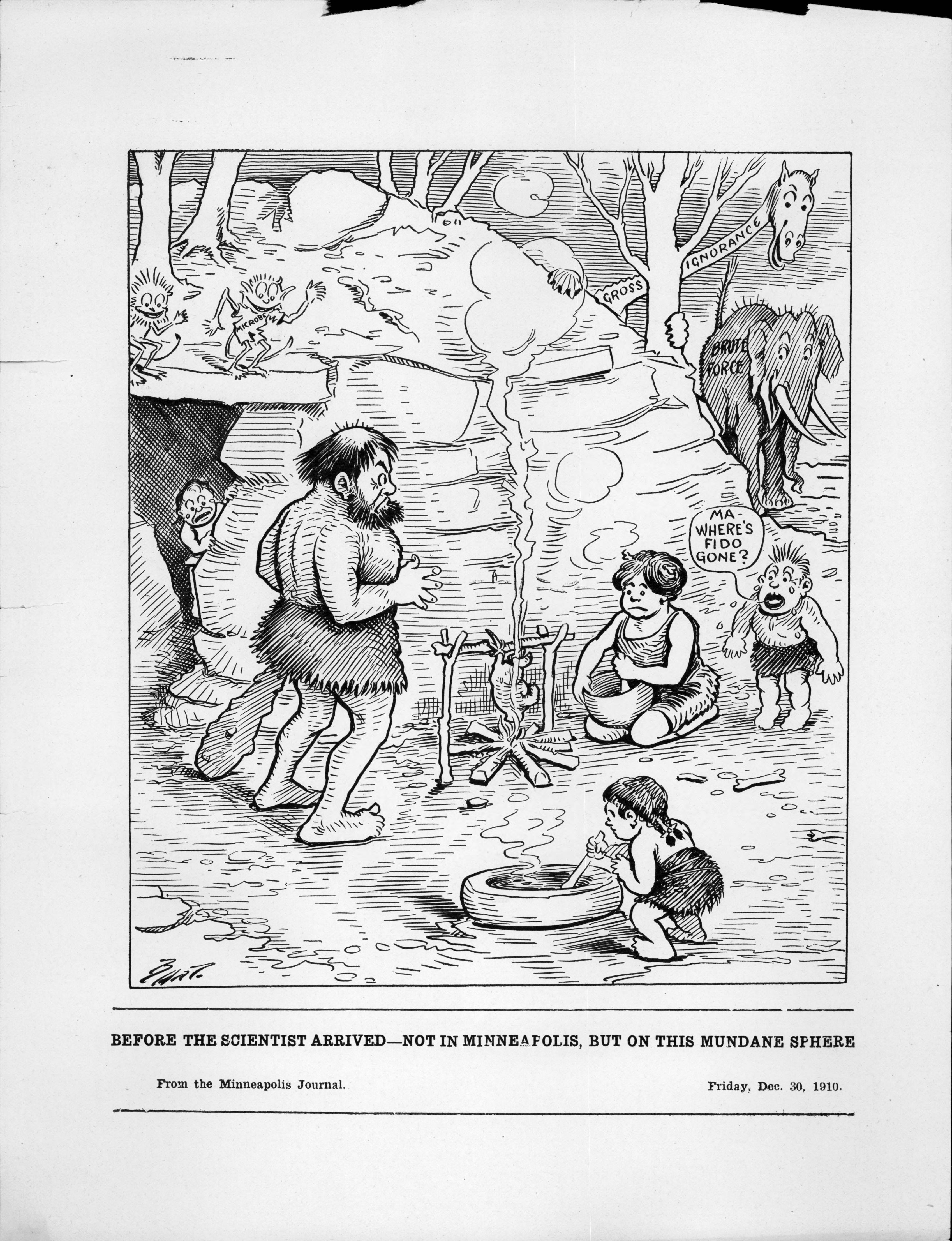
However, the first societies that emerged from Nature must have existed in seamless continuity with Nature’s logic of interdependence. These were natural cultures and natural societies.4
What are so-called “natural” cultures and societies? We do not mean natural as opposed to artificial, per se, as all human culture is artificial (manmade) by definition (although past societies have been less artificial in meaningful ways). Rather, to be “natural,” a society must interweave with the rest of Nature according to its complex logic of interdependent dynamic equilibria. This is, unavoidably, a loose definition; it is a matter of degree, and there is no clear cutoff between a natural and a non-natural culture; a culture can be more or less natural, and, possibly, perfectly natural. In this sense, cultures and societies are natural to the extent that they are well-integrated with Nature. Although unavoidably artificial, a society can be artificially natural.
By way of analogy, a plant or animal species indigenous to (originating from) its ecosystem has surely evolved “naturally.” However, dislocating it can make it unnatural to the extent that it disturbs the ecosystem to which it is transferred. It is organic and evolved “naturally” (in the common use of the word), but can only be considered “natural” (in the sense we wish to apply to societies and cultures) to the extent that it harmoniously interweaves with its environment, contributing to, rather than disturbing, its overall stability, biodiversity, and vitality. Normally, this happens organically through co-evolution (see the previous chapter).

This is, of course, not the typical way we think about plants and animals, all of which we consider “natural” in contrast with human culture. However, as an analogy, it serves to illustrate the characteristics of a so-called natural culture or society. In other words, the typical definition of “natural” as “that which originates from Nature” proves useless, considering the arbitrariness of the boundary between artificial and natural; everything in existence can be regarded as natural by definition, given a broad enough definition of Nature. Our redefinition of naturalness is more useful in that it differentiates between two kinds of societies and cultures.
A natural society is therefore not necessarily indigenous to its environment, nor is an indigenous culture necessarily natural. First cultures, those that emerged from Nature’s context of complex interdependence, nevertheless possessed the distinctively human capacity of storytelling as a means to weave meaning from and make sense of the hypercomplex Reality around them. As we’ve explored in Simplicity Complicity, stories can be more or less aligned with the complexity they mean to capture and simplify. Given this power, the first cultures could either maintain or forgo their “natural” state—with consequences. That is, unlike animals and plants, human groups must deliberately (or unconsciously) self-orient toward naturalness.
Deliberately Natural
In fact, we learn from anthropological studies of surviving natural societies that they exist, as they have for millennia, as far as we can tell (and according to them), in a deliberately harmonious balance with their environments. Such societies self-regulate their population sizes, do not take more than they require, are attuned to the species with which they coexist, and are generally in sync with the cycles and patterns of nature.5 It’s not simply that our natural ancestors attempted to avoid excessive exploitation of their habitats, as if reining in their inborn human exploitative tendencies. On the contrary, assuming the unique ecological role of stewards, natural cultures were actively engaged in enhancing the biodiversity and resilience of their environment. E.g, controlled burning by Aboriginal Australians.
Furthermore, those characteristics that have a natural culture mindfully tending to its relationships in its natural context also extend to the social sphere. If striving for harmony with the environment is the norm for one group, and also for another, harmony between the two should be upheld under similar principles. Although exceeding Dunbar’s number, a shared culture can stabilize social arrangements on large scales. And even across cultural differences in language, art, ritual, and practice, certain value systems can harmonize populations at scales that obviate Dunbar’s number altogether. However, what was stable in the ecological sense proved to be, as we shall see, an unstable equilibrium (conditionally stable) in the sociocultural realm.
Certainly, we are aware of unsustainable practices and violent conflicts in Paleolithic cultures, such as the extinction of megafauna species due to early human shortsightedness, as well as sporadic evidence of violent conflict between Paleolithic groups. It is clearly not the case that violence and unsustainable conduct are modern innovations. That being said, for the first cultures, these seem to deviate from the wider norm—peaceful, deliberately sustainable, harmoniously natural societies.
Cross-disciplinary evidence largely suggests that natural, Paleolithic “hunter-gatherer” societies enjoyed greater health, leisure, and peace than at any subsequent historical epoch. While these are broad generalizations, they appear to have been the norm among natural societies that established sustainable niches in the climate or context with which they interwove. So long as this context remained stable, such societies would be unlikely to destabilize it. It may be fair to assume that such societies consciously valued good health, leisure, peace, and harmony. Crucially, these valued goods seem to have been openly distributed in such egalitarian societies.
Although we typically dismiss our “primitive,” “prehistoric”6 past, the picture that emerges is that throughout most of the countless millennia that humanity has walked the face of its home planet, it is unlikely that we were the parasitic plague we came to see ourselves as in postmodernity (as per Agent Smith), but rather a new, peculiar layer of life on the Earth. Potentially, at least, as well-integrated into the planet’s cycles and rhythms as dandelions and bumblebees, only deliberately so. How does this translate into the value sensibilities of first cultures?
First Values
The emergence of culture did not somehow instantaneously detach humanity from biological and natural limits. The value systems of Natural societies, in so-called prehistory, must have somehow maintained continuity with Nature’s logic of interdependence. We often refer to these cultures as “animistic.” They ascribed consciousness, or mind, or agency, or personhood, or subjectivity, or interiority, to those species and places with whom they were in relationship.
In this series, we remain agnostic regarding any ontological or metaphysical claims such as those animating animism (is animism somehow true? Can we communicate with rocks? With birds? With trees?). Regardless, profoundly, animism leads to the perception of the intrinsic value of whatever it animates. Contrast intrinsic with extrinsic value; the notion that a tree’s value is determined by what one can build with it or sell it for on the lumber market is alien, if not outright offensive, to the intrinsic value sensibilities of animistic cultures, for whom the tree is alive in some real way. The tree is an end in itself, rather than a means to some other end. This, we argue, was a constraint for first, natural societies.
Perceiving Nature entirely through the vision of extrinsic value reveals a collection of resources to be exploited. Certain values are disclosed, others are obscured. A culture operating under such logic is all but certain to be unnatural. That is, such a society is likely to destabilize any ecosystem it attempts to exploit for whatever extrinsic purposes its value system outlines. Extrinsic valueception—the perception of things as means to an end—tends toward myopia of the larger interconnected picture; it differentiates ends from means. By contrast, an intrinsic valueception, the perception of other species as ends, stabilized indigenous cultures in a natural equilibrium. For a sense of this sensibility, see the Thanksgiving Address of the Haudenosaunee/Iroquois.
Whereas other animals that co-evolve within a biological context are natural due to the process of interdependent co-evolution, human societies, with the cultural flexibility of storytelling, must have maintained their natural state deliberately, so as not to destabilize the environment on which they wholly depend. The sensibility of intrinsic values was maintained through rituals, stories, taboos, and practices that interwove culture and Nature, maintaining society’s natural state. See, for instance, Māori rāhui (taboo) on overfishing.
Beyond Game Theory?
Those cultures that would survive the double-edged sword of Prometheus’ fire—storytelling and cultural evolution—must have maintained this careful balance for the sheer sake of the long-term sustainability of their niches. For (post)modernists, this may be easier to understand in game theoretic terms; if for no other reason, medium- to long-term self-interest could have led the tribe to maintain a safe, stable environment. The sheer mathematics of evolution dictate that, so long as they depend on a natural niche, over the long run, societies can self-extinct by eroding the ground on which they stand.
This line of thinking ironically suggests that cynical self-interest guided early altruism, or that we perceived means as ends as a means to an end. It is likelier that first cultures intuited through experience, or recognized through a more ‘heart-centered’ way of knowing, that the health of their environment is their health, and that it is affected by their practices and attitudes. These attitudes must have been maintained intergenerationally to avoid sharp cultural turns that would jeopardize the continuity of the tribe.
It is unlikely that such game-theoretical ‘realpolitik’ considerations led our Paleolithic ancestors to view harmony as a central value. It simply reveals to us that, whatever their reasons for valuing harmony, its neglect could spell doom for a natural society and a premature end to our young species.
None of this implies that the perception of extrinsic value was wholly absent from Paleolithic societies. For one thing, the kinds of developmental traumas that make one hyper-vigilant, self-protective, cynical, or self-serving could still occur in such societies. The argument is not, of course, that we were all virtuous saints à la “romanticized savages,” but that the sociocultural center of mass of first societies must have been around intrinsic valueception for these to have been natural, and thereby sustainable over the medium- to long-term. Such a valueception may seem unrealistic, idealistic, naïve, even primitive to modern eyes—an animistic perception of intrinsic value. Not “this oak can make me a magnificent desk,” but “Oak is magnificent.”
What Changed?
The perception of extrinsic value is so thoroughly entrenched in modernity, so seemingly ubiquitous in history, that we have come to conflate it with human nature. Although intrinsic valueception, as our story goes, seems to progress organically from Nature and into natural society through the unbroken cultural chain, whatever the modern person retains from this valueception is often not much more than a suppressed recognition or a subtle pang of longing, confusion, and guilt.
For stark juxtaposition, let’s fast-forward to more recent history. During the Age of Exploration, Western Europe first encountered indigenous cultures in places that had no previous contact with the Old World. On the whole, the meetings were not marked by a mirror-like cross-cultural self-recognition. These were first encounters between completely alien cultures. Beneath surface differences in language, custom, and technology, the value systems were, by now, entirely incompatible between the two worlds.
They might as well have been alien species, with the Europeans floating down from flying saucers instead of disembarking from caravels. Truly, any science fiction film portraying incomprehensible extraterrestrials coming out of nowhere to exterminate or subjugate humanity is, arguably, echoing the traumas of early colonialism. Underlying such horror scenarios is the assumption that this is simply how the universe, and Nature, operate. That is, advanced extraterrestrial species must also act according to the universal logic of extrinsic value. If they make their way to the Earth, their agenda must be that of a 16th-century Spanish conquistador.
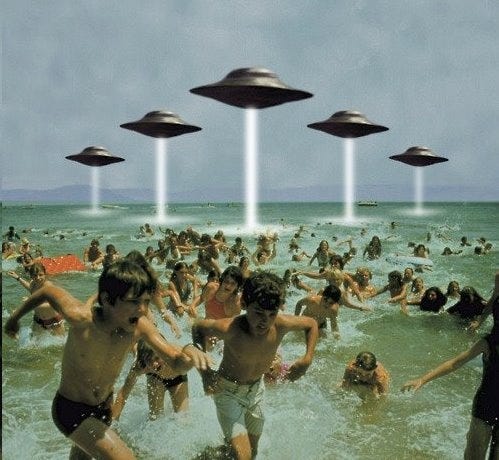
But how is this alienation (pun unintended) possible? If all cultures should be able to trace their ancestry to natural societies, how did the Europeans break this continuity? How has European valueception come to be incompatible with the intrinsic valueception that organically arises in natural culture, and that must be maintained for its sustainability? The difference was already entrenched by the Age of Exploration, predating modernity proper. Where did the chain break? When? How? Why?
Tracing the Split
At some point in the past, whether suddenly or gradually, a bifurcation must have occurred that would explain the undeniable cultural gap of the Age of Exploration.
Here is a commonly touted thought experiment and hypothesis. Imagine two human populations, living in two different environments. The first environment is hospitable. The trees are heavy with fruit, and the rivers are brimming with Salmon. Money doesn’t grow on trees (nor does it exist as such), but whatever one may want to buy with it does, figuratively (and often literally) speaking. The second environment is harsh—life is hard, marked by scarcity and struggle. Survival is an open question, not a given.
Now, the thought experiment goes, easy environments breed soft people, harsh environments, hard people. The divergence is explained through environmental differences. If and when the rugged survivors manage to reach the fertile, easy-life environment, they take what they find by force, hoarding the abundance and subjugating the local softies with ease. Only one of these two incompatible attitudes (and societies) may survive the encounter; they cannot coexist.
A Violent Turn
Historical and cultural complexity dictate that the truth must be more nuanced than this simplistic story, though the juxtaposition in itself is telling. Indeed, the Viking raiders descended from a frigid Scandinavia, and the Yamnaya, Mongols, and Huns hail from the harsh steppes. That being said, we also know of natural societies that found sustainable, peaceful equilibria even in the planet’s harshest environments, such as the Kalahari Bushmen and the Alaskan Inuit (AKA Eskimos). At the very least, we cannot conclude that hard environments breed hard people. Some additional element must have played a part, and we can only speculate at the (arguably traumatic) origin of what Riane Eisler calls dominator culture in The Chalice and the Blade. (climate change? Pastoralism inclining toward property protectiveness? We offer a different explanation below.)
What we do know with greater certainty is what happens when these two very different types of cultures—domination and partnership (Eisler’s terms)—make contact. Such tragic encounters occurred, time and time again, up to our very recent history, much along the lines of our sad thought experiment.
The first dialectical turn within Western culture may have been as violent and sudden as its echoes in the Ages of Exploration and Colonization, or it may have been a more gradual cultural shift (archeological evidence seems to support violence in certain areas and gradual shifts in others). Either way, the sky-god worshipping, coercive logic of dominator culture, likely descending on Europe from the Eurasian steppes on horseback, wielding copper and early bronze weapons of war, swept over Old Europe, replacing the Nature-Goddess reverential7 societies of late Neolithic Eurasia circa 4,500-3,500 BC. Dominator culture, not unique to the West, arose independently by the end of the Neolithic in the Americas and China(?8), and quite possibly at various failed and forgotten cases prior.
This shift carried social consequences about which it is often asked: Why did the natural societies of Eurasia choose to abandon horticulturalism, seasonal gathering, regional nomadism, peace, and egalitarianism in favor of large-scale grain agriculture, hierarchical, coercive societies, and war, given the marked reduction in health, communality, quality of life, and sustainability, among so many other things? But the question is misleading. One group’s subjective choice forms another’s objective circumstances. In other words, not all societies had the liberty of choice, as someone chose for them, recognizing through a different, incompatible valueception something they dared not—a hierarchical arrangement better serves the short-term ambitions of whoever’s at its top.
As such, the ‘Fall from Eden’ can be recognized as a perspectival loss, as humanity relinquished one value sensibility for another. The Fall does not mark the loss of some beautiful material paradise of careless frolic, but of a different mode of appreciation of and relating to the same Earth; the fabled Garden of Eden was not between the Pishon, Gihon, Tigris, and Euphrates, but in the eye of the beholder. This subjective, perspectival shift—from intrinsic to extrinsic valueception—carried objective consequences, as humanity descended into millennia of game theory, husbandry, and warring states. In a word, falling from Eden implies falling into history.
We do not argue that natural societies were innocently oblivious of the realities of violence. Proximity to Nature typically makes one better acquainted with the inescapable facts of life and death, not less so. Such societies are likelier to accept death, rather than being controlled by death anxiety. Neither was the shift we are tracing from an idyllic problem-free utopia to a dystopia of violence and degeneracy. The transition did not mark the invention of violence and the kinds of domination enabled by its threat. Rather, it was a value-collapse to these as the central organizing principles of classical society. To put it in different terms, this did not mark the invention of psychopathy, but its triumph.
This transition marks the dawn of history proper. As a matter of definition, this is either the first dialectical turn or the very starting point of the dialectical process.
A Note on the Dialectical Shape of History
It would be useful to pause the narrative and briefly consider the alleged dialectical shape of history. In general, a dialectical historical approach posits that history moves according to the dynamics and interactions of ideas.
There are different ways to conceptualize the historical dialectical process. One interpretation describes a fruitful friction between conflicting paradigms. Another would have one of these paradigms act as a direct antithesis to the other. The Hegelian formula is that a concept carries the seed of its own negation, and is thereby destined to collapse and be sublated by a new concept that preserves its truth while overcoming its limitations.
Our use of the term slightly differs from Hegel’s (thereby ‘sublating’ the Hegelian formula). Crucially, alongside the evolution of paradigms (“concepts” or ideas), we emphasize agency and imagination, their freedoms and limitations, thereby straining any notion of historical determinism. History is not arbitrary nor predetermined, but unfolds according to the reason and constraints of an evolving human interpretation.
Agentic Dialectics
Each epoch is the result of human decisions, taken at a historical ‘choice point.’ The decisions taken at this moment shape the following status quo. Seeing as these decisions are made by fallible humans who, for the most part, comprehend neither their own nature nor the nature of Reality, these decisions are flawed and the new status quo unstable, thereby holding the seeds of its own negation, as per Hegel. A new choice point will be presented as the status quo begins to unravel, where decisions made (be they deliberate or unconscious) will define the next epoch’s status quo, and so on.
Of course, each decision point responds to the circumstances of its moment and is limited by the breadth of human imagination at that time. For this reason, Hegel (and Marx) took the historical dialectical movement to be teleologically legible and, hence, predictable. And, if each step enfolds the lessons of the previous one, then history must consistently progress to increasingly better concepts and paradigms.
But history is not written from the God’s eye view of Hegel’s Geist. It is shaped by the decisions of fallible human beings, who can be ignorant of the past, and whose imagination is shaped and constrained by the circumstances of their own status quo (created by the decisions of previous fallible generations).9 While our theory deflates some of the predictive promise of Hegel’s dialectical vision (or, say, Marx’s), it resituates this power back into the hands of human agents; we cannot predict how the future will unfold. Instead, we must decide how it unfolds. By interpreting history, we perceive a shape we then project into the future.
As we explored in Simplicity Complicity, we humans weave narrative out of a complex Reality. Not only must we decide how to respond to given circumstances, but, more deeply, we must decide what the meaning and significance of these circumstances are. Through this element of freedom of choice in interpretation, agency is reintroduced into the dialectical process.
This formula fits any major or minor dialectical turn throughout history, such as the murder of Julius Caesar, the Treaty of Westphalia, the French Revolution, and so on. None of these epoch-defining decisions can be attributed to historical determinism, and most of them were made by a tiny minority of historical actors who held or claimed agency and thereby instated a new status quo. The formula also fits the shape of an individual's life, shaped by decisions made from a certain level of understanding, and that define a temporary status quo, such as committing to a certain education, career path, or relationship.
In natural societies, rather than ideology or an abstract idea made manifest as a social system, there is a continuous need to maintain equilibrium with the complex natural environment. This is the dynamic “status quo” of Nature’s interdependence (dynamus quo?). This can be interpreted as a continuous dialectical flow rather than a static equilibrium. Through this ongoing pressure and dynamic flexibility, this kind of human organization is less prone to negation through internal contradictions than later social orders. As we explored in Simplicity Complicity, such contradictions stem from a mismatch between simplifications (stories, ideas, social orders) on the one hand, with the complexity of Reality (human nature, ecosystems, social systems, etc.) they mean to capture and navigate on the other.
In this light, history does not begin with writing, but with the simplifying concepts of fallible humans, manifested as social systems striving for immortality but fated to fall one after the other. History will end when we outgrow this pattern, not by arriving at a static utopia (another abstract idea destined to fail), but by shifting our approach to the project of society and civilization altogether. We will return to this point, and to historical dialectics, in future work.
Back to the Story
A decision was made by the disenfranchised. They acted as historical agents, creating a world where they could take what they felt entitled to by force. This was not simply the choice to conquer, dominate, and expand, but more fundamentally, the choice to weave out of circumstances a certain narrative—that of a competitive, hostile universe and inhospitable Nature that must be brought to heel. If Nature Herself is attempting to dominate us, we will become dominators in turn. Being a part of Nature, we reflect Nature within ourselves, according to our perception of Nature. This interpretive decision led to the “fall into history,” and its unfolding stages of unstable, temporary status quos successively following one after the other.
In her work on Neolithic Old Europe predating this transition, archeologist Marija Gimbutas paints a picture of the lives of the Goddess-revering indigenous Europeans. These societies were already complex, semi-sedentary, and nevertheless egalitarian (challenging the notion that technological advancement necessitates hierarchy and domination). They are also described as creative, but this may be misleading. Artistic may be a better word, seeing as the cultures that supplanted these were no less creative. Were their conquerors dumb brutes? Deplorable demons? Were they not also human beings, albeit operating under a different value system? Instead of music, arts, crafts, “household” technology, and cultural refinement, creativity can just as well be put to use in the service of weapons technology, strategy, and empire-building.
The early warrior conquerors were creative innovators in the sense that they went beyond the bounds of what natural society had found acceptable, perhaps even imaginable, up until that point, revealing that power differentials can be made into the central organizing logic of a society, and all that this entails. Their valueception revealed a virgin landscape of power and glory.
Warrior Culture
“…And on the pedestal these words appear:
’My name is Ozymandias, king of kings:
Look on my works, ye mighty, and despair!’
Nothing beside remains. Round the decay
Of that colossal wreck, boundless and bare
The lone and level sands stretch far away.”
Ozymandias of Egypt - Percy Bysshe Shelley
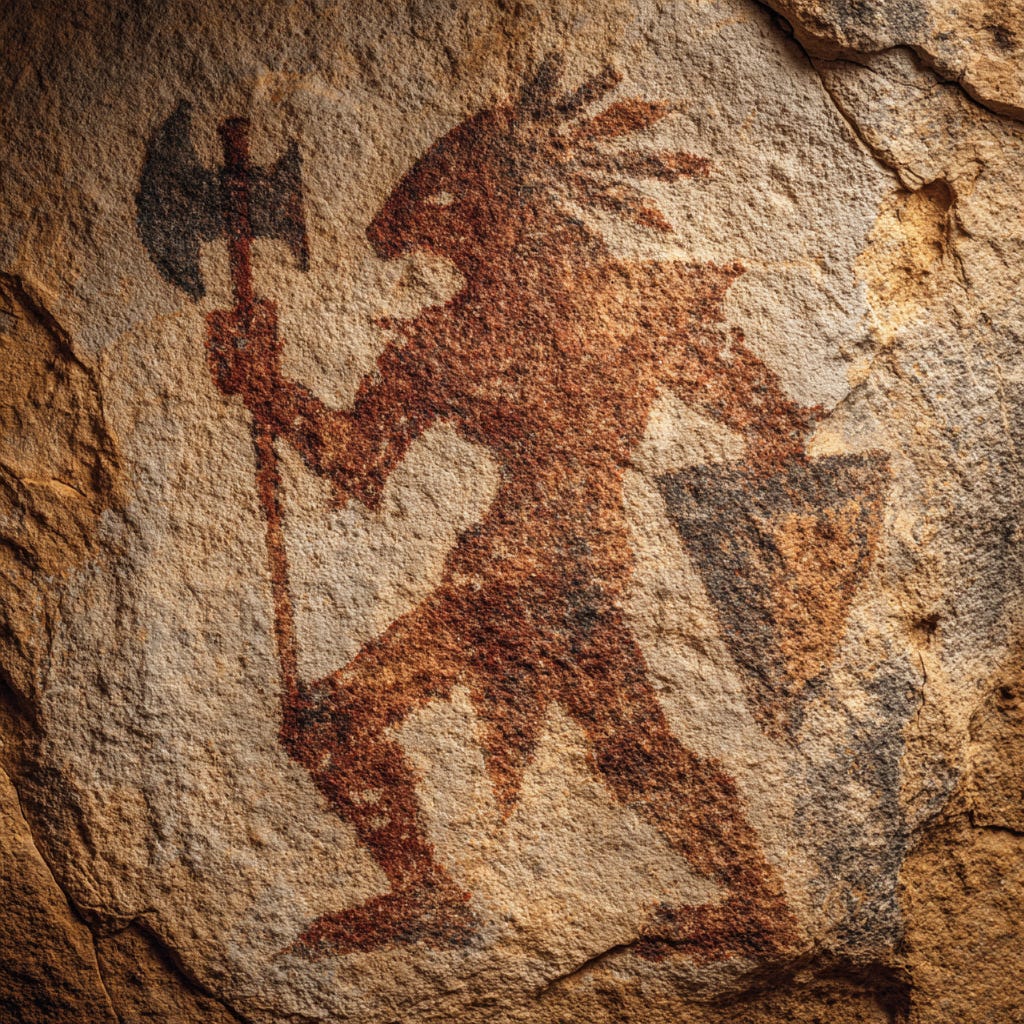
In warrior culture, essentially speaking, power rules. If the strong decide to make violence the name of the game, they can make an irresistible argument through their chosen form of logic; stabbing your interlocutor in the neck with a spear wins most arguments. And the stakes are high, as the winner takes all—glory and possessions. Land, livestock, wives, concubines, and slaves are accumulated to signal greatness over others. Hierarchy is necessary to keep the new social game going, motivating players to overpower one another, jockeying for a better position on the pile. The new valueception reveals the previously unseen rules of the emerging game of power.
This is the result of the first dialectical turn. The choice, as it were, needed to have been made only by a few, as the tiniest of seeds can eventually spread by force according to the game-theoretical logic of multipolar traps.10
Even societies opposed to the logic of force would be gradually pulled in by the new, strange tide. They would inevitably become increasingly suspicious of outsiders and be compelled to find means to protect themselves, be it through fortifications, armaments, or strategic alliances, as they adapt to the new pressures. As such, the question is not how the conquering culture conquered other cultures, but whether conquest-culture in itself proliferated. That is, even if a conquering society loses a battle, conquest-culture wins the war by ‘infecting’ the survivors. It does not much matter in this sense whether warrior culture expanded through sheer conquest or cultural pressure, nor whose genes went where.
As noted, the logic of the game is not quite that the stronger wins (though accumulating manpower and resources does increase one’s strategic leverage). More importantly, one outcompetes by being more unscrupulous, more creative in their application of violence to make things go their way. Breaking a taboo and the status quo of, say, “gentlemanly warfare,” can give one a short-term advantage. With time, the game degenerates down the path of such taboo-breaking decisions. The history of warfare is rife with such examples (with the last taboo left standing being, of course, nuclear warfare).
Humanity’s value landscape changed beyond recognition and is completely incompatible with its natural society predecessors. In warrior culture, value must be perceived extrinsically—a projection and an imposition. What is your life worth to me? Murdering a fellow human being is infinitely more difficult than extinguishing an objectified, dehumanized enemy, first stripped of intrinsic value.
Through power valueception, people, animals, plants, places, and artifacts are appreciated for their extrinsic, instrumental value to their possessors, who can derive direct (e.g., food, work, offspring) or even indirect and abstract use (e.g., prestige) from them. Here, we first glimpse the ascent of property. Amassing possessions for the sake of amassing, which would have been perceived as a somewhat disconcerting quirk in a member of an egalitarian, non-acquisitive society, is now a socioculturally legitimized status symbol—proof of competency over others in the new game of power.
Status and the Trauma of Self-Worth
To the few victors went the spoils—comfort, luxury, glory, leisure, possessions, power, status, and respect. Extrinsically valued objects flowed upward in the hierarchical stack, and those with social mobility (warrior-born) vied for social ascendance to enjoy more of the fruits, now accumulated and accruing to the few, of the new order.
Such a focus on competitive accumulation makes societies protective and also aggressive. Ironically, although we are past the Paleolithic period we typically label as ‘tribal,’ this is the point in the story where tribalism—a clear, systemically necessary classification of friend and foe—was normalized. The stranger may make for a more ancient and fundamental archetype than the enemy in the human psyche.
As we better understand today, this pervasive obsession with accumulation and possessions is indicative of an existential confusion and a wounded self-perception. Lack, as an existential mode, compels one to ineffectually fill an inner void with stuff, and an inferiority complex to be overcompensated for by lording over others. This is the self-reproducing trauma of the wounded warrior. It is perpetuated and propagated through sociocultural mechanisms, ranking the extrinsic value of its members and differentially withholding from them basic goods, creating a hierarchical logic that they then internalize.
This first major value system shift—from intrinsic to extrinsic valueception—was gradual, but comprehensive, with one system thoroughly supplanting another. First cultures were natural cultures, evolving organically out of Nature, and were associated with particular forms of social organization—egalitarian, deliberately ‘lightweight,’ and adaptive. As we will see in the next chapter, the transition to instrumental, extrinsic values eventually led to entirely different societies—hierarchical, patriarchal, possessive, standardizing, and expansionary.
Shrinking Circles, Rising Walls
Are intrinsic and extrinsic valueception mutually exclusive? These are better perceived as two cultural centers of mass. While it is true that some societies gravitate almost exclusively around one or the other, it would be difficult to draw hard lines, especially during gradual transitions between the two. It may be unreasonable to argue that natural culture was completely pure of a perception of extrinsic and utilitarian value. For instance, hunting and fishing do take place (as they do throughout the food chain), though these are typically approached in reciprocal, relational terms in natural societies.
Even more unreasonable would be to suggest that warrior culture was thoroughly devoid of the perception of intrinsic value. Instead, this perception shrank to a tiny circle of care. Even the most heart-shrivelled tyrant perceives their own intrinsic value (the end of all those other means). Less cynically, they may also care for their immediate family, perhaps friends, or even their whole tribe or nation, though at the expense of everything outside this circle, now stripped of intrinsic value.
Intrinsic valueception cannot be eradicated from the human core, however hard any society may try. Rather, the circle of care can shrink, defining a border to be protected (do the walls grow taller as the circle shrinks?). Nevertheless, glimpses of a broader perception of intrinsic value may still shine through in moments of awe or moral clarity, in grief or regret, in a spontaneous swelling of love for a stranger, animal, or anything outside one’s socially condoned circle of care (today: the nuclear family and, to a lesser extent, the nation, friends, and pets).
Regardless, hierarchical, competitive social structures cannot permit intrinsic value to run rampant, as it contradicts the social logic; the workers chopping down old-growth forests to feed the furnaces of empire may or may not feel a pang of guilt, but the supervisor snapping at their necks has a quota to fill and his own masters to fear higher up the chain of command. Here, humanity transitioned from I-thou to I-it relationships, toward everything, including itself.
Value Stratification
This shift in valueception was coupled with an ongoing stratification—greater war-leaders (and the priests of their warrior gods), over middling warriors, over the subjugated masses (and women). The warriors valued prowess, valor, glory, and ostentatious wealth. Respect and, lacking that, fear in the eyes of others. These were the markers of status in the new social game.
With social stratification, the value systems themselves became stratified. Clearly, warrior values are socially destabilizing if permitted among the subjugated masses—workers, slaves, and women. Therefore, value systems diverged by class, with the players of the game of power (elites) motivated by certain rules and logic, and subjugated classes playing a different game—one of survival, with very different goals and incentives. Same society, diverging worlds.
Warrior culture forms the foundation of the classical world, out of which the modern world will later emerge. This foundation buried natural culture, with which it was incompatible, under its short-lived palaces, monuments, and ziggurats. Classical society became increasingly alienated from the natural world, which was, to its rulers, disconcertingly unpredictable and complex.11 Archetypally speaking, the Wounded Warrior on top—the Tiny Dictator—simplified society through his might-makes-right rationale, shaping the social world according to his traumatically formed desires based on fundamental existential lack.
From this point on, intrinsic valueception will repeatedly resurge to challenge the totalizing logic of societies grounded in external valueception and their entrenched interests.
All Bad?
One can easily argue that the transition to warrior culture in Eurasia, China, and Mesoamerica was, uniformly, a change for the worse for the vast majority of humanity and any other species on the planet. Especially when one considers that in the early Neolithic to Chalcolithic Goddess-revering Old Europe, “complex” societies, agriculture, early metalwork, and even animal husbandry were already practiced. That these developments predated the transition to warrior culture suggests that hierarchically competitive societies are not prerequisites for technological progress, for which they sometimes get credit.
One could even argue that the alleged winners of the new social order were, on the whole, losers alongside everyone else, living sadder, more alienated, and stressful lives. One could call the shift to warrior culture the ascent of psychopathy. Not its invention, but its triumph as society’s new modus operandi. One may even describe this transition in terms of evil gaining the upper hand over good.
But good and evil are moral terms. Upstream from morality are dimensions of value, and they are the stars of our story. Good and evil aside, in the transition, we traced the descent of intrinsic valuception and the ascent of extrinsic valuception. In particular, the landscape of extrinsic value as seen by the players of the game of power. Upon this landscape, which, typically, looks just like a game board, one aims to win, and all else is simplified to a pawn or an obstacle in the eyes of one who seeks such an end.
To Be Continued…
The first dialectic turn in our story may have been for the worse. But, within modernity, even this much is heretical. To the modern mind, alienated from Nature, habituated to convenience stores and air conditioners, civilization must be seen as progress from the base, miserable state described in Thomas Hobbes’ Leviathan. This justifies the blind thrust of science and technology for their own sake. Progress is the foundational myth of modernity’s ideology, which demands a reading of history as uniformly moving from bad to better. The hegemony of this narrative has been challenged by new archeological sites and insights, as well as the courage to listen to surviving natural cultures without prejudice.
As such, for a truly modern reader, this chapter of the story (alongside the previous one) may elicit visceral reactions or objections. While it may be the case that such reactions point to the purgative potential of challenging modern blind-spots, we do not wish to antagonize modernists (or anyone else, for that matter). We are not taking the purely deconstructive postmodern stance, nor do we suggest somehow going back in time to the “Stone Age,” though it may have been a world more hospitable to the human animal, more sustainable and sensible than modern ideology must insist. Even more than this, we blame no one. Not Spanish conquistadores nor the Yamnaya, for their past choices. Better would be to claim responsibility for future ones. We are all part of the same juvenile species, still slowly and painfully learning to handle Prometheus’ fire of storytelling, its risks, and its awesome potential.
We do not take on this investigation so we can decide which chapter of history we want to return to—an escapist fantasy. Rather, we aim to clarify the landscape of values, to elucidate why we want what we want, and to ascertain what truly matters. In this way, our forward movement may be more deliberate and conscious, rather than blindly directed by inertia. This applies not only to the individual, freed to pursue what they more clearly perceive as good, but to society as a whole.
Our story will continue in the next chapter, as we move to the classical world, where the trends initiated by the warrior conquerors became sociocultural givens, unquestioned in history until this very post-postmodern moment.
Coming soon in High Resolution—Part 2 - Chapter 3 of Value Harmonics, where we continue doing the work, finding the clarity needed to aim for a future truly worth pursuing.
As we explored in The End of TINA, modern societies must condition their populations to take for granted that There Is No Alternative to maintain stability and ideological legitimacy.
Valueception is a concept derived from the German term Wertnehmung, coined by philosopher Max Scheler (1874–1928). As we use the term, different valueceptions are receptive to corresponding fields of value.
The concept of ‘memes’ as units of cultural information—an analogy of what genes are for biological information—was introduced in Richard Dawkins’ The Selfish Gene, mentioned in the previous chapter. Dawkins’ modernist conception of cultural evolution is arguably over-reductive. Instead, see, for instance, Eva Jablonka and Marion J. Lamb’s Evolution in Four Dimensions.
We adopt the terms “natural society” and “natural culture” from William H. Kötke’s The Final Empire, and will attempt to define these precisely and to expand their use.
See, for instance, David Graeber and David Wengrow’s The Dawn of Everything or William H. Kötke’s The Final Empire.
In the Western canon, history begins with written records, whereas first cultures with unbroken cultural chains rely on oral transmissions of knowledge. When the intergenerational oral knowledge transmission is abruptly disrupted, we risk completely losing a cultural thread that has been woven through generations beyond count. As such, written historical records are especially useful for those cases where one must dig them out of the dirt to find out what went wrong. We present a different differentiation between prehistory and history in this chapter.
Goddess reverence is a hypothesis originating with archaeologist Marijah Gimbutas. There is no academic consensus on this hypothesis, which we find to be the likeliest interpretation of the proliferation of female figurines in Old Europe, particularly in association with Gaia—Mother Earth as an intelligent, sentient entity. While some interpret Goddess reverence as a stage of religious development distinguishable from animism, it nevertheless corresponds with a similar intrinsic valueception—the two are not mutually exclusive.
Despite the current lack of archeological or genetic evidence, it is not inconceivable that early Chinese history was as influenced by the presence of the steppe nomads as later China clearly was.
That being said, it is premature to dismiss Hegel’s Geist. We will return to this point in future work dedicated to historical dialectics.
Popularized by social philosopher Daniel Schmachtenberger, multipolar traps are game theory cases in which every agent is compelled to make a self-serving move, even though all agents ultimately lose as a consequence. Common examples are arms races and tragedies of the commons. See Scott Alexander’s Meditations on Moloch for examples and a general discussion.
Old Europe’s reverence for the Goddess was replaced with the worship of moralizing sky gods in their hierarchically unsurpassable position high in the sky (and with a priesthood elite comfortably positioned as their Earthly spokespersons)—a transition from reverence to Nature as Reality to submission to hierarchy as an abstract principle. The feminine is associated with Nature, complexity, and creative chaos; the masculine, in this case, with simplicity, order, and (a certain form of) society.