
The Classical World Stood Still
Value Harmonics - Part 2 - Chapter 3

This is a series concerning values. We are aiming toward a new, post-postmodern value discourse. We strive, as we arguably must at our current historical juncture, for a level of clarity unprecedented in human history regarding what does and does not matter.
Where We Left Off
In Part 1 of this series, we presented and framed the issue of values from a phenomenological perspective. Rather than abstract ideas, this positions values as felt forces that move humanity by shaping the contours of the desirable and undesirable. Alongside nominal values—ideals such as justice or freedom of expression—this definition introduces lived values into the conversation, which exert a similar, though typically unspoken and often more potent, force in directing human affairs. In this way, we reframed values to penetrate the (explicit) nominal layer and reach the (implicit) actual forces that shape and move the human world.
Using this definition, in Chapter 2, we identified that at the heart of the metacrisis1 lies the value crisis. Seen this way, the entire metacrisis results from modern society’s disorientation rather than from its lack of competence, organizational capacities, or whatever opposing force.
To get to the bottom of this disorientation, in Part 2, we began our historical excavation—a story of the evolution of values. In Chapter 1 of this part, we presented the scope of our excavation and examined the prehistoric natural backdrop from which first, cultures emerged—a Nature that weaves countless co-evolving strands into a dynamic, harmoniously interdependent tapestry, rather than a “Battle Royale” world at war of all against all. We argued that while nature is not devoid of conflict, neither is it defined by it.
In Chapter 2, we explored the natural cultures of the Paleolithic, Neolithic, and Chalcolithic, and their animistic and Goddess-reverential, intrinsic-value systems.2 We also arrived at what we presented as the first dialectical turn in our story: a coercive turn toward extrinsic values, shaped by power valueception (value perception)3, driven by the conquests of a Proto-Indo-European warrior, or dominator, culture. This dramatic turn, disrupting humanity’s long-standing communal, egalitarian, and natural ways of being, likely inspired the fabled “Fall from Eden,” which is the fall into history.
More than the loss of some material utopia, this fall marks a fundamental perspectival shift and, arguably, a valueception collapse. From perceiving an interconnected field of intrinsic value, humanity transitioned to imposing or projecting extrinsic value on objects, organized around the logic of power—power valueception. Power valueception reveals a “topographical” landscape in which one’s power is relative to others’. In its way, the field of power presents a rich arena with nuance and layers all its own. This game of power was not invented at this historical juncture. It can be seen throughout the animal kingdom (e.g., in chimpanzees and lobsters). Surely, power played some role in the dynamics among ancient tribes. Here, it became the central organizing principle of human society.
Here, in Part 2, Chapter 3, we shall examine the arc of the classical world that resulted from that dramatic transition and up to Europe on the cusp of modernity. On this classical structure, built on an underlying foundation of the warriors’ conquest and domination, rests the whole modern world to this very day.
Whereas the previous chapters explored areas of historical amnesia, we now enter the period that the West typically incorporates into its canonical self-understanding.
Classical(?) History
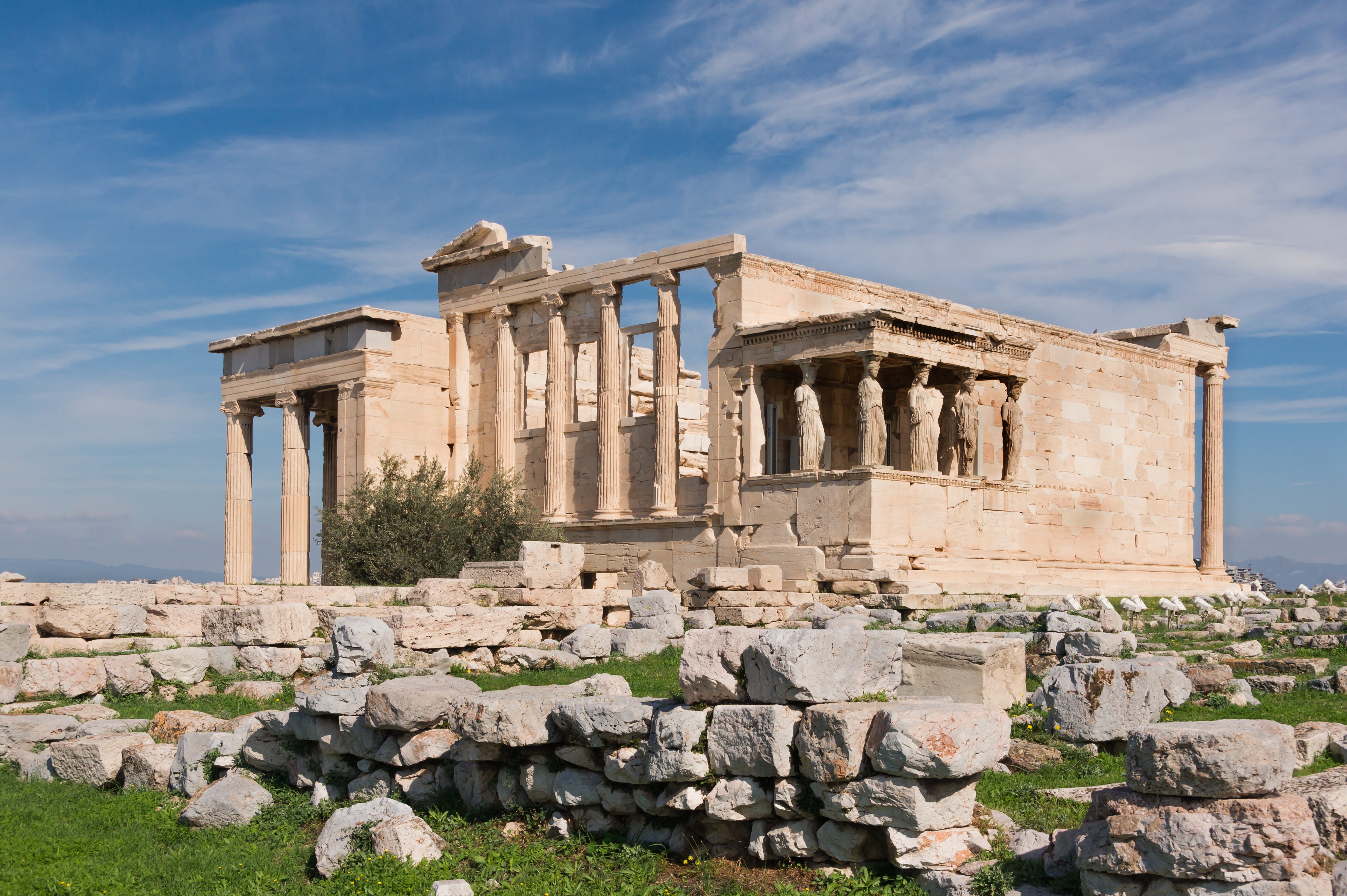
What is “classical history,” anyway? In the West, “classical” typically refers to the Greco-Roman period from which Western civilization proudly claims its heritage. The word classical is derived from the Latin classicus, meaning "one who belongs to the highest class of citizens." The word entered English and other European languages during the Renaissance to signify “the highest class,” attributed to the Greco-Roman period as a civilizational high point in the West. Ergo, the classical period meant the best period.
From a 15th-century Renaissance thinker’s vantage point, this attribution is understandable, as Medieval Europe never regained the cohesion, organizational efficacy, and power of the Roman Empire, nor the cultural refinement of Athens. We use the term differently. While classical derives from classicus, classicus in turn comes from classis, meaning, simply, class. Classical history, then, in our post-postmodern story, is the history of class-based societies, as we derive classical from classis rather than classicus.
However, we’re not proposing this reclassification based only on a linguistic happenstance. By widening our historical aperture to appreciate advanced egalitarian societies, we can no longer take the class logic for granted. Therefore, more so than the Greco-Roman period, classical (class-based) societies warrant their own social taxonomy, as they produce their own characteristic shape of historical movement (competition, war, booms, busts, collapse, etc.). It may, therefore, be more telling to outline the classical period as one that began long before the Greek city-states or the Roman Empire, and to which these belonged, perhaps as outstanding examples.
In other words, during this long historical stretch, from the earliest Fertile Crescent city-states to Europe on the cusp of modernity, little changed in the world. “Classical” societies formed, fell, merged, and morphed. Through innovations in sailing, economics, state bureaucracy, military, religion, and so on, and despite being repeatedly questioned, challenged, and rebelled against, the deeper underlying value assumptions remained remarkably stable throughout this extended classical period.
By focusing on the structures of valueception, we may rapidly move through a turbulent, dramatic classical history to track not what changed but, rather, how the classical world stood still.
The Classical World
“History is only the pattern of silken slippers descending the stairs to the thunder of hobnailed boots climbing upward from below.”
- Voltaire (?4)
In the previous chapter, we explored natural cultures and their perception of Nature. Cultures that see Nature as this benevolent, motherly Goddess, engendering interdependence, harmony, and warm fuzzy feelings, will manifest societies that act as an extension and reflection of this Nature. If, on the other hand, a culture perceives Nature as inert, mute, or arbitrary, or even as some oppressive hellscape, its society will manifest quite differently (our picture of the world is always one half of a self–world dyad). Warrior culture can be seen as a revolt against an unfair universe, as if it were an absent or abusive parent. Associated with such a perception were the moralizing, demanding, often bloodthirsty sky gods worshipped by the ancient conquerors.
After this cosmic rebellion swept over the Old World, it ‘cooled down’ to coalesce into the classical world. Having completed their conquests, the warriors settled down with their captive ‘wives’ to divide the spoils, thereby turning from external conquest to internal stratification.5 The crucial point lies in the intergenerational shift—what was first taken by force was later given by force of habit. In other words, first the paradigm shift to extrinsic valueception moves horizontally to envelop the world through conquest, and then inevitable vertical questions arise: although everything is declared property and appropriated, the question of its distribution remains. The historical answers to this question were class and heredity, marking the dawn of the classical world.
Bronze Age
Having installed themselves as a ruling class, the conquerors formalized their gains into social facts through law, myth, and custom.6 Here, we see the birth of the stratified state through the invention of class and aristocracy. Stratified societies were stabilized intergenerationally through heredity, as caste systems became the norm across classical Eurasia, leading to the emergence of the first Bronze Age states and empires.
These early states, backed by force, perceived, through power valueception, the utility of land, people, and strategic resources, and sought to concentrate power and extend their dominion, only to encounter similar opposing societies seeking to do the same. Such temporary social orders are always destined, as we know in hindsight, to collapse under the weight of internal contradictions and external competition.
The rise of classical society is associated with that of polytheism. These hierarchically superior supernatural beings were appeased in order to secure divine favor and political legitimacy. Later, hierarchies could form between these godlings as one state triumphed over another.
This project crashed dramatically (presumably following a mature, interconnected economic system) circa the late 13th to early 12th centuries BCE, with the Bronze Age Collapse. The collapse saw the destruction of Mycenaean palaces, the abandonment of Hittite cities, and the fragmentation of Egyptian power—yet the palace economies and tribute systems that drove these were reconstituted within centuries by successor states. Dramatic as it may have been, the classical value system survived the collapse intact. This brings us to the Greek city-states that emerged from the rubble.
Classical Greece
“[Athenians:] Our opinion of the gods and our knowledge of men lead us to conclude that it is a general and necessary law of nature to rule whatever one can. This is not a law that we made ourselves, nor were we the first to act upon it when it was made. We found it already in existence, and we shall leave it to exist for ever among those who come after us.”
The Melian Dialogue - Thucydides, 5th century BC (Rex Warner tr.)
The story of Western civilization typically begins here, in ancient Greece, with its idealized philosophers, marble sculptures, and a well-balanced Mediterranean diet. But Greek culture did not spring from a vacuum. It was submerged in a world it came to take for granted, of class-based societies—the legacy of conquest. Let’s examine the structure of these societies through the Greeks’ own thought.
In Plato’s The Republic, as part of an exploration of the nature of justice, Socrates conjures the ideal society. This was, simultaneously, an exploration of human nature and of the ideal society in its light. Plato’s utopian polis has three castes—leaders, warriors, and workers. For Plato, this arrangement reflected humanity’s tripartite soul, composed of eros (epithumetikon), thymos (thumoeides), and logos (logistikon)—or desire, spirit, and reason.
Through Socrates, Plato argued for the existence of three types of souls, each suited to a different social caste based on innate disposition—inclination to one of the three aspects of the tripartite soul. A single society, comprised of different “organs” which are constituted by different types of people, is nevertheless acting as a social whole. But each of these different castes clearly has a different value orientation—those seeking truth, justice, and wisdom (logos), those chasing glory, adventure, and ambition (thymos), and those making do with a snack and sexual gratification followed by a nice nap (eros).
We don’t have to agree with Plato’s model, nor assume it precisely reflected political realities in the classical world (The Republic was prescriptive, not descriptive), to recognize that, within these classical societies, different classes engaged with different aspects of society and were driven by completely different values. Individual humans are complex and more likely to consist of a composite of these three (or other?) qualities than be completely pigeonholed into one or the other. Regardless, in a broader sense, different classes do appear to be motivated and oriented by distinct values and considerations, shaped by their contexts and affordances. Clearly, not everyone cares equally about valor and honor, or wisdom. And the pursuit of either can be seen as an inaccessible privilege for those at the bottom or fringes of stratified societies, eking out a daily existence, subject to the whims of their ‘superiors’ and other forces beyond their control.
Here, we already see that class-based societies cannot have a unified value system. It may be more accurate to state that such societies have a set of value systems that define different castes or arenas within a single social body, perhaps harmoniously, perhaps in tension and opposition. The slave-trader may value coin and prestige above his peers and competitors, but the slave values their daily bread and the faint hope of freedom, as not much else is within practical reach. Whether ideal, pragmatic, or socially enforced, these facets of society are driven by distinct values, making stratified and “complex” societies multifaceted value compositions.
Drives, Values, Virtues
By this point in the story, we already recognize that values can be either intrinsic or extrinsic. Some are socially imposed on a class or group, and some are culturally self-reinforced. Either way, values are shaped by circumstances. Values determine what is important and how we orient ourselves in the world. They spring from many sources and are influenced by various factors. Now, with the Greek philosophers, we see the beginning of something new: a process of rational reflection upon values and their social implications—a budding value meta-awareness—reflected in the philosopher's acts.
With the tripartite model, Plato already put the matter of multiple value dimensions on the table. He recognized the split nature of those values that drive us and the conflicts these contradictory forces may stir. In Plato’s model, we recognize the thymotic drives of ambition and valor that may have compelled the ancient conquerors. But the warrior is driven by another source—the admiration, respect, or fear of others. In other words, extrinsic motivation—social approval and validation.7 Of course, being social animals, all human beings can sense and be moved by such social pressures. However, the directions in which social approval pushes and pulls one depend on a culture’s value system.
Alongside socioculturally shaped values are biologically originating values that we previously called drives. Seeing the social pressures at play, it is debatable whether eros and thymos values can be labeled as drives. This would correspond to the view that all motivation and values can be reduced to biology—survive and procreate. Either way, the values of eros and thymos are often implicit and unexamined. Such values already explain the actions and reasons of the dominator conquerors and of much of classical society. But, alongside these, Plato also introduced another, loftier set of values into the equation. Seeing as we are complex beings pushed and pulled by conflicting drives and values, some logic is required to put the house in order. This is a function of the third aspect of Plato’s tripartite soul—logos.
The logos leads us to consider virtues—character traits meant to regulate or sublimate lower drives in the service of higher values. These were examined extensively by Plato’s “successor,” Aristotle. Virtues are aspirational character traits, meant to transmute our lived value landscape into a refined, clarified, ideal form. Thereby, we will pursue not pleasure and glory, but the Good, the True, and the Beautiful. As Aristotle and later adherents of virtue ethics would have it, virtues are character traits we are to cultivate in a lifelong pursuit of eudaimonia (flourishing).
Here we must ask, if our actual values are (within warrior culture, at least) sex, wealth, and glory, where do any ideal nominal values even come from? If we could reduce motivation to biological drives, from where does the logos originate? Or the means to rank and discriminate between a ‘lower’ drive and a ‘higher’ value or ideal? For Plato, the answer was the pure ideas—the objects of philosophy—forms in a transcendent realm of which the world of phenomena is only a manifest, distorted reflection. Through rational inquiry, the philosopher can clarify their understanding of Truth by moving toward a clearer perception of these pure ideas. The alternative? Being distracted by phenomena—distorted shadows of that which is really Real. For Plato, this process is not done for a superior philosopher to lord over his lessers in an intellectualized echo of the approval-seeking, competition-obsessed wounded warrior, but for the intrinsically motivated elevation of one’s own soul.
Was Plato’s Republic a revolutionary social vision? By this point in the story, tripartite and similarly stratified societies were the norm in the ancient world. The social stratification of Plato’s ideal polis was a given in the classical era, seen in India, Egypt, Persia, and within Helenic Greece herself.8 Plato could be accused of merely seeking a grand rational (and metaphysical) justification for a particular brand of stratified society he favored, while taking stratification itself for granted and remaining partially blind to the contingencies of his own culture. Stratification aside, Plato was clearly critical of the warrior values that were so thoroughly dominant in classical Greece, as captured by the aristocratic concerns of his day.
The values intended to lead Plato’s Republic were those of the logos. The thymotic energy of the warriors was to be directed by the wisdom of logos. The same held both for society and the individual. This notion, culminating in the figure of the philosopher-king, was provocative, if not outright subversive. It accepted the necessities of warfare and of social stratification, while arguing that it is not the strength of the warrior but the wisdom of the philosopher that must direct society, if it is to be a good society.
More subversive, perhaps, was the very use of the logos to self-reflect on the social order, in conjunction with human nature, in search of a polis that is not dictated by the force of arms but by the power of reason. In Classical Athens, we see the beginning of a rational, self-reflective discourse about the proper ordering of society and its values. Instead of accepting our values at face value (a telling pun), we can examine their sources, their cross-influences, and their social consequences, and reflect on the means to refine them toward their pure form or some higher ideal (by cultivating the appropriate virtues, perhaps).
Noteworthy here are the Greek Cynics, who rejected society’s norms wholesale. Out of the cynics will emerge the stoics who, in their later stages, rather than questioning the social order, will simply accept social realities as givens beyond one’s control, culminating in late stoicism becoming the philosophy of skillful conformity by the Roman period.
When the Greek philosophers began philosophizing, the Good, the True, and the Beautiful were set in dialectical tension with the baser drives. Drives, values, and virtues entered discourse, to be examined, reasoned about, and sorted out so they may be consciously refined in one’s character and, ideally, within society. A first glimpse of a society ordered around deliberately examined values made its first, precarious appearance on the world stage since the dawn of the classical era, in ancient Greece.
The Story So Far
Natural cultures emerge organically in a social species that awakens to self-recognition within Nature, embedded in Nature, and reliant on Nature for its survival. Such societies perceive a field of intrinsic value. Rather than being ‘undifferentiated’ from their ‘Mother,’ Nature, these cultures properly perceived and situated themselves within an interdependent whole. Such societies are disinclined to impose their value system and will on the world.
Warrior, dominator culture, most probably shaped by formative experiences within a less hospitable Nature, came to perceive Nature, the universe, or Reality, as a hostile Other. This led to the valueception of extrinsic, utility value in resources, possessions, and people. This utilitarian value system, oriented around considerations of power, thoroughly supplanted its predecessor, the neglected roots of which still cry out for attention at the pit of the human gut.
The social ideology of warrior-dominator culture expanded by force. In time, this ideology coalesced into stratified, coercive societies through custom, law, myth, and religion, making the descendants of the conquerors into the first aristocrats—passively inheriting their privileges—in what we call classical culture. The values of the aristocratic elites, playing the game of power, bifurcated from those of the ruled classes, whose inferiority was now socioculturally enshrined and intergenerationally reproduced.
In Ancient Greece, we find the dawn of an open, deliberative, rational reflection on values and the societies they co-arise with, and a plea for a different set of values to govern the human world. But this seed of rationality will have a tumultuous journey ahead of it, as the coercive logic of warrior culture will reach unprecedented heights through the rise and fall of...
Rome
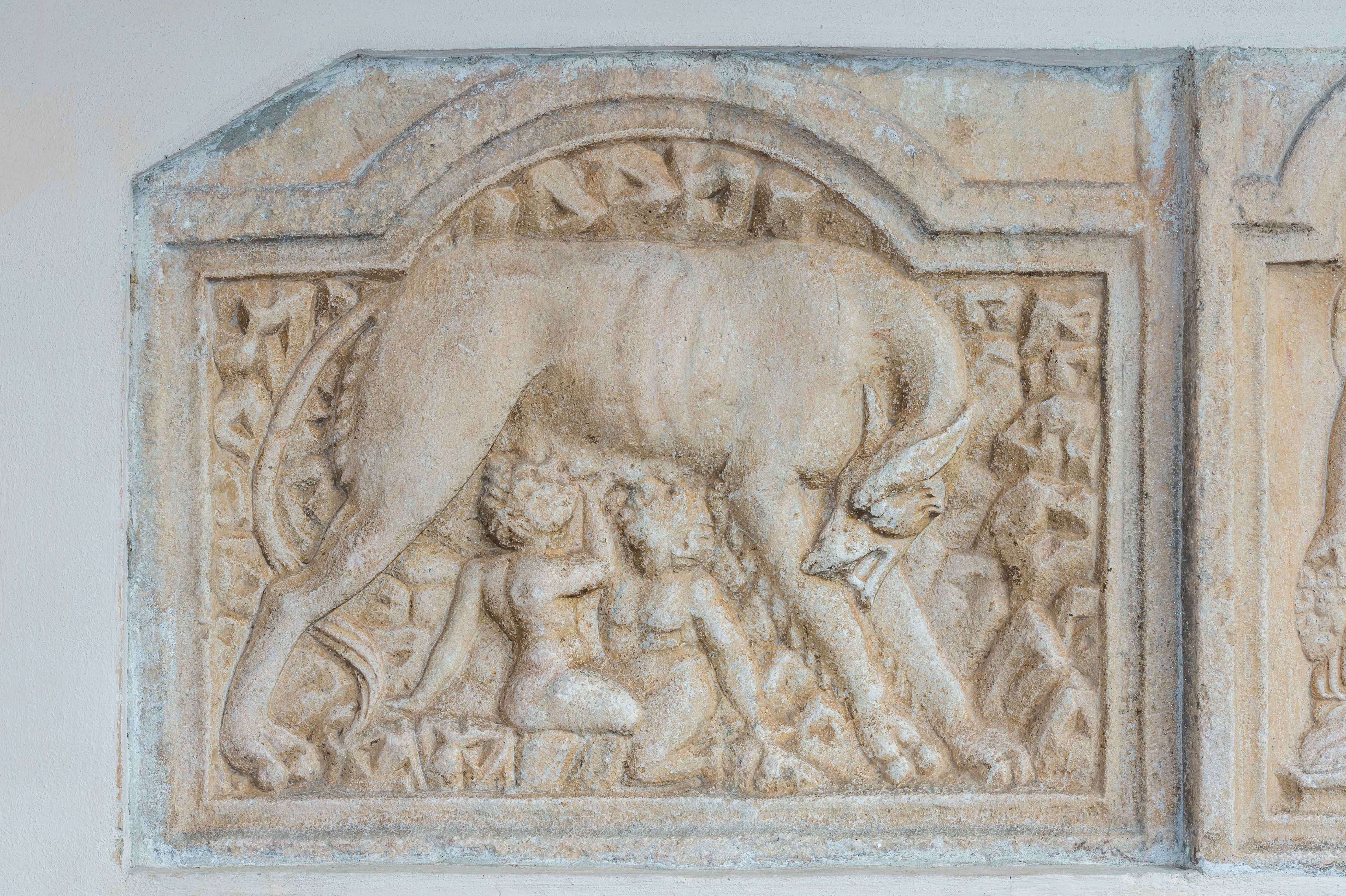
In the second half of the Greco-Roman period, circa the 2nd-century BCE, Rome came to dominate the Mediterranean world.9
Although the Romans culturally idolized the Greeks, their off-brand statues and, perhaps, their discourse, were but pale imitations. Or perhaps, Rome’s vastness simply magnified the internal contradictions between the different value systems of a stratified society. The more rigidified Rome became, the more stoicism, the philosophy of coping, rose in prominence. In the main, Roman discourse was political, not philosophical, intended to support its social order rather than question it too deeply. Nevertheless, albeit in a limited form, early Rome retained the discursive seed of its Greek role models (now enslaved as tutors for the children of Roman elites).
The Republic
Early Rome liberated itself from its “tyrant” king to become a Republic. This “liberation” was limited to the aristocratic class. Though classical Athens was classified as a democracy and early Rome as a republic, both are better recognized as aristocracies. In its Republican phase, the Roman aristocracy convened, deliberated, convinced, and connived on the Senate’s floor. This period saw popular uprisings from the lower classes, the plebeians, leading to limited concessions by the aristocracy,10 as well as the rise (and violent fall) of several populist reformers. Lower even than the plebeians were, of course, the slaves. No concessions were made to slaves, the lifeblood of the Roman economy.
Seeing as the Roman Republic became an uncontested regional hegemon, one might have expected the end of history, at least in the Mediterranean. But the internal contradictions of classical societies deny any such sustainable stability. Class conflict is only one such contradiction. The extrinsic valueception that sees Nature as resource leads to environmental degradation, forcing classical societies to either collapse or expand (and then collapse).
With conflicting aristocratic interests vying for an edge on the Senate’s floor, Rome was incapable of rallying effectively in times of crisis. These required the Senate to willingly cede power to dictators, making the crises and their resolutions tense periods for the young Republic. As reforms concentrated more power in the hands of generals, Gaius Julius Caesar ultimately marched his army on Rome herself, making himself dictator for life. After his assassination, his descendant Augustus formalized Rome’s status and structure as an Empire, hollowing out the Republic’s deliberative processes and concentrating all power in a small imperial bureaucracy.
Augustus remade Roman society. To the plebeians? Bread and circuses. To the defeated republican aristocrats? Wealth and status (but no political power). And to the slaves? Nothing but the weight of a growing empire on their broken backs. Note the echoes of Plato’s tripartite polis, split between imperial bureaucracy, aristocrats, and plebeians, as well as the continued ignoring and objectifying of the human slave.
The ineffective republican structure, with its quibbling, self-serving aristocrats, gave way to imperial order for order’s sake. A dialectical reaction to the failings of the quasi-deliberative Republic. A choice, a response to the inadequacies of the Republic, made by a tiny minority, led the march of history.
The Empire

The Empire’s policies and actions were in the hands of the imperial bureaucracy, steered by the emperor of the day's reason, values, and whims. A “good emperor” would steer the system with the good of the system itself in mind (however that good is perceived by him). A “bad emperor” may use the whole organization for self-aggrandizement or even pettier ends.
By the time of its collapse, the many millions under the Empire’s dominion had their fair share of both kinds. Marcus Aurelius, the philosopher-emperor, exemplified the former, ruling with a sense of duty tempered by existential resignation; Caligula and Nero exemplified the latter, turning imperial power into spectacle and caprice. Yet even Marcus Aurelius, the Stoic emperor, waged perpetual frontier wars and tolerated slavery while musing about powerlessness as the most powerful individual in Rome.
With the death of the Roman Republic, any semblance of public political participation was extinguished. On the whole, the Roman Imperial system fed each class its small desires; its only real systemic purpose was to expand and perpetuate itself. The question of what society should be about, which was at least hypothetically open for public discourse in the Republican phase, was sealed, to be taken as the final word—Pax Romana—by all citizens who should be obedient and grateful for their colosseums and aqueducts.
Society is an organizational structure we enact collectively; a reflection of the values and assumptions of its creators. In the language of our previous series, Simplicity Complicity, a society is a simplification, a story, or an idea. It is a plan of action that takes into account the world's complexity as understood by its designers and reduces it according to their values. The Roman Empire was not concocted ex nihilo. It was a response of individuals to the shortcomings of the Republic that preceded it, limited by their imagination and assumptions about human nature and Reality, shaped as these were by their contingent circumstances. Who gets to decide which values guide society? The warrior’s answer was as simple as it gets: to the victor go the spoils. In dire circumstances, all pretense is cast aside, and classical society reverts to this default, to be won over by some ambitious general.
For the vast majority of the population, values are largely shaped by a given social reality. The Roman Empire was shaped by the values of its creators, and these came to be enforced en masse. Not those values that the ruler ascribed to himself (on a good day, for a philosopher-king—some benevolent logos), but his perception of the masses and their (eros) desires—bread and circuses—and the (thymos) desires of the aristocrats—wealth and respect—that the imperial order allotted to either.
The Story So Far
Natural culture was supplanted by warrior culture. Warrior culture was codified and stabilized into the classical world of stratified societies, where the values of different classes diverged into their respective zones of interest and access, as dictated by whoever’s on top. This stratification was entrenched and expanded under Roman dominion, systematizing distraction and compliance to pacify the politically silenced masses.
Such was the classical world, now taken for granted over millennia of momentum, hit by the shockwave of Christianity and a spiritual message that posed an actual threat to the calcified status quo.
Yeshua the Radical
Yeshua (anglicized—Jesus) was born in Judea, a troublesome little province within the Roman Empire. His life and death triggered a sociocultural upheaval.
What were the values originally espoused by Yeshua? This may be a subtly misleading question, as Yeshua’s values were downstream from his metaphysical, or “spiritual,” claims. Claiming that He11 argued for care for the poor, for instance, may be watering down His much more radical message. Yeshua did not merely advocate for kindness to the poor; rather, he pierced through the entire extrinsic value system that normalized class and wealth. His message subverted not the surface layer of policy, but the classical value system that was so thoroughly entrenched by the time of Rome’s dominion.
Yeshua saw straight through the sociocultural assumptions of his time. We do not mean to offend anyone’s faith, but we do diverge from orthodox Christology, as we find it questionable that Yeshua would have Himself claimed to be divine in some way He would deny of others, for instance, by announcing Himself the only Son of God. We perceive in Yeshua an embodied recognition of universal divinity. If Yeshua was “superior,” it was, ironically, in His capacity to recognize equality. He modeled spiritual clarity and integrity, virtues to be cultivated, attainable regardless of one’s circumstances of birth. He stood out as an uncompromising beacon for intrinsic valueception in an ocean of extrinsic, utilitarian valueception, serving as a timeless exemplar of enlightened, socioculturally piercing perception.
Yeshua’s radical message was subversive, as He situated values outside of social norms and sensibilities. His message of equality was inimical to classical Rome’s social order, which relied on slavery, hierarchy, and distracted, pliable masses, placated with small pleasures. He aimed to retrieve human dignity through the long-lost capacity to see others as intrinsically and equally valued souls. This anti-hierarchical vision subverted social value sensibilities that sorted people by power, money, status, and sex, and where human lives are literally for sale on the marketplace.
Rome crucified Yeshua for His subversive message and proceeded to persecute the early Christian community violently (though sporadically and strategically) for their refusal to worship the emperor and participate in the civic rituals that upheld Roman identity.
Christianity challenged the warrior culture’s logic—the foundation of the classical world, which Rome epitomized. To the warrior ethic that will fight for its honor, Yeshua said to turn the other cheek. He challenged the money game and social stratification, equalizing men and women, owners and slaves, Caesars and plebs. Yeshua was a spiritual revolutionary.
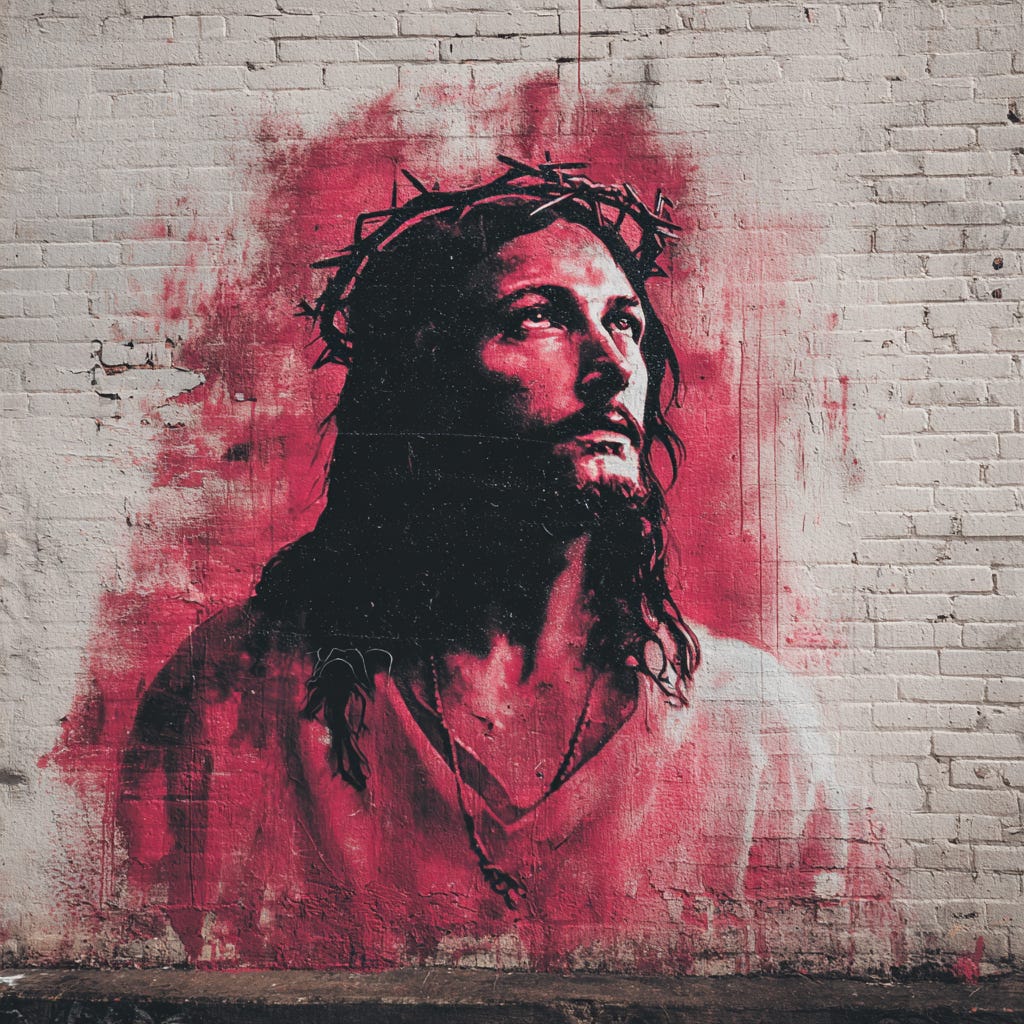
The logic introduced by the warriors was gradually codified into inheritance laws and traditions to justify the social stratification of the classical world from which Rome emerged. In their unadulterated essence, the values of Christianity threatened the entire social order of the classical world. But after Yeshua's death, the purity of this message quickly eroded.
Although Yeshua exemplified direct communion with divinity, it is unclear whether His early followers were adequately equipped or informed about how to locate and cultivate this connection within themselves (if you’re considering fasting for 40 days in the wilderness, first consider your support system). The early Christian communities laudably strove to emulate Yeshua’s open love and equality, attain mystical union with the divine, and embody His teachings, but over time, as divergences and plurality arose regarding how to live as ‘Christian’ individuals and communities, tenets, prayers, and customs became codified, and a hierarchy of spiritual leaders emerged. Early Christianity gradually institutionalized into a structured, defanged religion, a trajectory largely shaped by the early influence of one Paul of Tarsus.
This gradual erosion of the original Christian spirit—especially in its more feminist, egalitarian, and direct-experience aspects—its ongoing hierarchical institutionalization through a network of local bishops, and its rapid spread throughout all social strata of the Roman Empire, made this budding religion, originally perceived as a threat, to be increasingly considered amenable to the Empire’s interests. From the height of systemic prosecution, within a few short centuries, what was once a subversive sect challenging the empire’s underlying value logic became its official religion.
Christian Rome
“[Paul:] Let everyone be subject to the governing authorities, for there is no authority except that which God has established. The authorities that exist have been established by God. Consequently, whoever rebels against the authority is rebelling against what God has instituted, and those who do so will bring judgment on themselves.” (Romans 13:1-2)
Before Emperor Constantine, the values of early Christianity changed gradually. Upon its adoption as Rome’s state religion, its values changed abruptly.
Yeshua’s nonviolent message, intended to transform society's value sensibilities, was ironically used to justify compliance with the social order. His Kingdom, “…not of this world,” was co-opted to signify a nominally Christian Empire. Eventually, for the sake of creating this Christian kingdom, soldiers would march bearing crosses on their banners and shields in what may very well be the greatest symbolic inversion in known history. Now, ostensibly in the name of Christ, instead of universal tolerance and a recognition of intrinsic value across all contexts, non-Christian ‘pagan’ spiritualities were outlawed and violently persecuted to create a culturally homogeneous, simplified, and standardized Christian Empire.
The last Emperors of unified Rome hoped to use the universality of Christianity to glue together a crumbling empire, but it was not long for this world. Nevertheless, the last-ditch maneuver had profound historical implications: although the Roman Empire collapsed in Western Europe, its fusion with the Church endured, continuing its dominion for another millennium.
Medieval Europe
In the height of historical irony, the rebellious message of Yeshua was co-opted by the social structure it threatened, retained in symbol if not in spirit. But it was not merely an aesthetic shift from a Roman Empire to a Roman Church. The social order was now justified through Christian metaphysics, with judgment—an afterlife in heaven or hell—theologized as God’s absolute justice, to which any good Christian must conform. Instead of threatening the class structure, nominal Christian values were used to keep the population in check.
Medieval Western Europe was defined by the hybridization of the declining Roman Empire and the rising Christian Church, by kings ruling under the doctrine of divine right bestowed upon them by the Abrahamic God (through his Catholic representative on Earth, how else), and the gradual shift from outright slavery to feudalism (for Christians, at least). This new tumultuous Christian world came to define Europe and its values for more than a millennium, between three estates—Church, nobility, and commoners—echoing Plato once more.
The relative economic stability of this period also saw the slow reemergence of cities (e.g., Venice, Bruges, Lübeck) and with them an urban merchant and artisan class organized into guilds, accumulating wealth outside feudal land tenure and thereby creating new centers of power that would challenge both noble and clerical authority in the centuries to come. (We will return to these in the next chapter.)
Before Christianity, the Roman Empire was an imperial bureaucracy that cobbled together disparate populations of occupied provinces through Romanization and Caesar worship. Because society’s elites were Roman, ambitious provincial power-players “Romanized” to climb the social ladder. But with Christianity, a new universal identity could be adopted throughout the Empire, bringing together heretofore diverse communities under a shared context (though we are discussing the Christianizing West, a similar process was underway in the Eastern Roman Empire).
Medieval Europe resulted from these processes, on the one hand, homogenizing culture, on the other, redistributing political power to rising Christian kings and nobles. Western Europe experienced its fair share of internal feuds and power struggles after the collapse of Pax Romana, but these took place within a single Catholic sphere—a religious empire, modeled on the patriarchal and stratified classical Roman order it replaced. Classical society, based on the underlying logic of warrior culture, remained structurally intact throughout, now with a religious garb to cover its classical social skeleton.
Whereas Rome’s Emperor was no more, the bishop of Rome became Pope and presided as the religious patriarch of the loose confederation that constituted a Catholic Empire, in his stead.
Christian Values?
For the most part, the values of medieval Europe remained unchanged from those of the classical age. Aristocrats vied for power. Serfs, where they replaced slaves, toiled to survive under their overlords. Europe became less pluralistic, more homogenized. Those authentically seeking to follow in Yeshua's footsteps toward mystical union had to confine themselves to a monastery or nunnery, where their clarity could not disrupt or challenge the status quo. Those who did challenge it faced an inquisition. Even slavery was not abolished.12 Monastic estates across Europe held serfs bound to the land by law and custom, just as any other feudal lord. Here, one must pause to reflect on the thin line separating serfs and slaves (indeed, the word, though it was retroactively applied to the commoners, is derived from the Latin servum, meaning slave).
And what of Christian love? Within the Christian Church, Christian charity and benevolence must have played a part, especially among agrarian communities of serfs serving their lords. The serfs showed their love to their masters by being obedient and productive. The masters showed their (paternalistic) love by providing protection, justice, and alms, embodying noblesse oblige. To the non-Christians, not even this much “love” was granted.
In short, those ‘Christian values’ that did not threaten the social structure were integrated into the social body of Europe, and the same classical social order was now justified and reinforced through a universal religious worldview—it is God who placed the clergy and the nobles above the serfs. Whichever part of the medieval world one was born into, it was all apparently sanctioned by God.
The equality between the sexes that characterized Yeshua’s teachings and the early Christian communities was completely erased in the transformation, and Europe remained patriarchal. Where Yeshua pointed the way toward spiritual realization and communion and a recognition of divinity and intrinsic value in all, the Catholic Church presented a hierarchical and mediated access to divinity, making some holier than thou, ostensibly and ironically, for the sake of maintaining the purity of Yeshua’s teachings and the canonical meaning of His life and death.
Any “pagan” or heretical thinking that jeopardized Catholic homogeneity was violently quashed. The interpretation of the New Testament, which remained in Rome’s old language of power—Latin—was reserved for a trained religious cadre. The theocratic Catholic Church proved to be a more stable political entity than any previous known Old World Empire, by diffusing power among its regional warlords (kings).
The Rift
In Christian Europe, a rift grew between lived values and nominal values. “Do as I say, not as I do,” says the hypocritical parent to their child—a parent enculturated into a morality they themselves are conflicted by. An inner rift between what one cares about and what one should care about, and the rise of an internalized religious superego that admonishes one for one’s moral failings, with the added threat of eternal damnation. In other words, we must distinguish between lived and nominal values to recognize Christian Europe for what it was: one more classical society. Preaching humility, equality, and love while living hierarchy, patriarchy, and coercion, may have made Christian Europe more hypocritical than any classical society prior. This rising tension played a pivotal role in what was to come.
The frictions of an uneasy amalgam of inherited values, nominal and lived, with their internal contradictions, set the stage for a new rupture—a crisis of certainty and the pursuit of universal truth through reason that would convulse Europe before gripping the whole globe.
The Story So Far
Natural values were supplanted by warrior values. The logic of the classical world, grounded in the game of power, was institutionalized through inheritance law and custom. This was brought to rational, reflective discussion by the Greek philosophers, a tradition that still faintly glimmered in the Roman public participatory politics, before being silenced as Rome became a total Empire and hollowed out public political life.
This stratified, calcified social order was challenged by Yeshua, the spiritual Revolutionary. But His message was co-opted by the empire, which steered the formation of the growing Christian community to suit its own agenda.
Now that the classical world was first codified, secondly enforced by the total power of empire, and thirdly justified by religious cosmology, having endured for many millennia of stability, change was nevertheless on the way. An unstoppable wave that had been swelling for many centuries was about to hit Europe. Though it aimed to wash away the corruption, we must ask what guides its flow. Does it now threaten to drown us all, scrubbing barren the face of the Earth in its wake?
To Be Continued…
To this day, the Greco-Roman period is idealized as a golden age of Western civilization. And many, disenchanted with modernity’s secular value system, prefer to return to their religious roots as an alternative to an increasingly incoherent and unsatisfying materialistic paradigm. In this chapter, we presented a sober, critical interpretation of classical history. But is classical society “all bad?”
Are there no redeeming aspects to stratified societies? More specifically, to the Roman social order or that of the Roman Church? Both of these stabilized human society, if nothing else. Thinking of Europe after the collapse of the Western Roman Empire without the Catholic Church, it is easy to imagine a chaotic mess. The Church provided many social services through its network of abbeys and preserved knowledge across Europe, serving as the only centers of scholarly pursuit. Similar concessions may be granted to Pax Romana and its aqueducts.
But assigning moral judgment on the architects of the Church or the Roman elite is misleading. The choices that led to the status quo represented and maintained by these institutions were made by historical agents with imaginations and values shaped and constrained by their times. Here lies a point more pertinent than moral condemnation: agency and imagination, potential and constraints.
Classical history, as we name it, is what the modern schoolteacher simply calls history. Whereas the previous chapters of our excavation explored strata of historical amnesia, this period of history wholly defines the collective, modern memory. When a modern person extols the wonders of modern progress, they compare their modern comforts to the classical period to which their historical memory is confined. Their view of human nature and potential is likewise wholly shaped by classical history. We cannot condemn or blame our ancestors for their choices, as these were constrained by the breadth of their imagination and their views of human nature, shaped by the circumstances of their birth. Rather, it would be more productive to note where our own imagination is similarly constrained, given our collective amnesia and the ways we frame and view our history. Recognizing all this, our own imagination may be liberated. This is the process we are engaged in.
We blame no one. The largest oversight may be the all-consuming logic of extrinsic value that replaced natural societies’ perception of intrinsic values too thoroughly. The way in which this early phase became buried under the ruins of later failed states brought us to take classical values for granted. This class-based logic, the value system bifurcation of stratified societies, remains so entrenched in our thinking to this day that imagining the world without it typically looks like anarchy of the worst kind.
Nevertheless, this classical world was headed for an upheaval. Through the various shifts of the classical world, with its political entities rising and falling, so much remained the same. These were all minor turns in the grand scheme of things, given that even Christianity did little to unsettle the value system that rests on might-makes-right warrior logic and defines class-based society to this day. For millennia, the classical world stood still. A deeper transformation was perhaps overdue.
In Chapter 4, we will explore this great upset. That of the Renaissance, the Enlightenment, modernism and its revolutions, up to our current postmodern, or late-modern, historical moment. We will see how classical values were transfigured but never lost, and only partially examined throughout the process. This revolution is, after all, still taking place. We will thereby complete the stage-setting for the synthesis of Part 3 and a post-postmodern map adequate to make better sense of all this complexity.
Such a map is needed to guide us through value clarification and to the indescribable vistas beyond. As the 2nd quarter of the 21st century looms, our inherited values are ripe for examination and, possibly, reimagination.
What are the values that truly guide us? Collectively? Individually? Where did these come from? What shapes what we strive for and see as good? Can we not imagine something better? Can we not choose otherwise?
Can you sense, underneath the surface, the clarified form of your desires?
Join us in the last chapter of Part 2 of this series, where we conclude the historical narrative to arrive at the present, still-revolutionary moment, moving one step closer to a post-postmodern value sensibility and the unprecedented clarity of our all-too-human condition that it promises, right here in High Resolution.
The metacrisis is a term that aims to capture the interconnected nature of the crises currently besetting modern civilization, be they ecological, economic, cultural, political, geopolitical, technology-driven existential threats, etc.
Typically, animism is associated with the Paleolithic (Stone Age), and Goddess-reverence with the Chalcolithic (Copper and early Bronze Age), with the two perhaps overlapping during the Neolithic (New Stone Age). Seeing as animism and Goddess-reverence are not mutually exclusive for cultures with sophisticated cosmologies, there is good reason to question these classifications and ask whether animistic cultures were aware and reverential of the Goddess in some form and, more to the point, whether Goddess-revering cultures ceased being animistic.
Derived from the German term Wertnehmung, coined by philosopher Max Scheler, valueception is, as we use the term, the capacity to perceive a particular field of value. I.e, there are various possible valueceptions.
Though this quote is often attributed to Voltaire, it cannot be found in the body of his writing.
Rather than distinct phases, these can be seen as overlapping processes; we are simplifying slow-moving, complex trends.
E.g, Hammurabi’s Code in Babylon (c. 1750 BCE), formalizing penalties by class and enshrining hierarchy into law. More generally, palace and temple economies enshrined hierarchy in practice. Beyond these, this period saw the codification of laws and rules that confer hereditary property rights in perpetuity, for example, the Code of Lipit-Ishtar (c. 1930 BCE). Intergenerationally, these link property rights rooted in extrinsic valueception to inequality and the class structure itself.
Not to be confused with extrinsic value—value conferred to an object by a subject, rather than being intrinsic to the object—this speaks of extrinsic motivation—values shaped by external forces, rather than being intrinsic to the subject.
See Georges Dumézil’s trifunctional hypothesis, which sees the division of sovereignty, military, and productivity as a characteristically Proto-Indo-European social structure.
Through destroying Carthage in the Third Punic War and becoming an uncontested regional hegemon.
Most notable is the secessio plebis (secessions of the plebs) in which commoners withdrew en masse from the city, forcing the patricians to create the office of Tribune of the Plebs (494 BCE) to represent their interests. The power of these tribunes was, predictably, quite limited, though it marked a symbolic concession.
We are capitalizing Yeshua’s pronouns—He/His—not to signal a theological stance regarding His divinity (say, Trinitarian unity), but out of respect for and recognition of the great Teacher’s path, attainment, and contribution.
Indeed, papal bulls such as Dum Diversas (1452) officially authorized the enslavement of non-Christians.