
The Value Crisis
Value Harmonics - Part 1 - Chapter 2
This is a post-postmodern series about values.
In Chapter 1, we introduced the territory. We defined what we mean by values. We aimed to make concrete what’s typically a vague subject. Values are felt “force fields” in the human experience, determining what does and does not matter.
In this chapter, we will discuss how this relates to our (post)modern predicament, perhaps best captured by the term metacrisis.
The Metacrisis
The term metacrisis highlights the interconnected nature of the myriad crises facing modern civilization. When we view climate change, economic instability, war, poverty, and other system breakdowns as separate issues, we lose sight of their interconnections and of the true complexity of our situation as a whole. Attempting to resolve any one of the interconnected issues as if it were an isolated matter may produce a shallow, local reprieve, while likely exacerbating other sectors (e.g., solving hunger through shortsighted agricultural practices or attempting to counter global warming through geoengineering).
Locating the Metacrisis
“…and if a factory is torn down but the rationality which produced it is left standing, then that rationality will simply produce another factory.”
Robert Pirsig, Zen and the Art of Motorcycle Maintenance
The metacrisis is, at root, an outward expression of issues intrinsic to modern culture. In any era, the society we inhabit is a reflection and outward manifestation of our assumptions and values. Similarly, the metacrisis originates in human choices and activities; it is anthropogenic—man-made. But this claim that the metacrisis originates from within us, that it is somehow a predictable outcome of modern culture, is vague and can be interpreted in various ways.
Were it the case that the metacrisis resulted from our failure to comprehend complexity, it would be akin to a failure of management.1 Then we could say that the metacrisis is cognitive in origin. We would then simply need to put more ‘competent’ people in charge, à la technocracy,2 and the metacrisis would be subdued.
If, on the other hand—or in addition—the problem is not that we are not succeeding in what we are trying to accomplish, but rather in what we are trying to accomplish in the first place—that is, an issue with what and why, and not with how—then the heart of the matter is somehow elsewhere, having to do not with competence, but with orientation.
We argue that at the core of the metacrisis lies none other than…
The Value Crisis
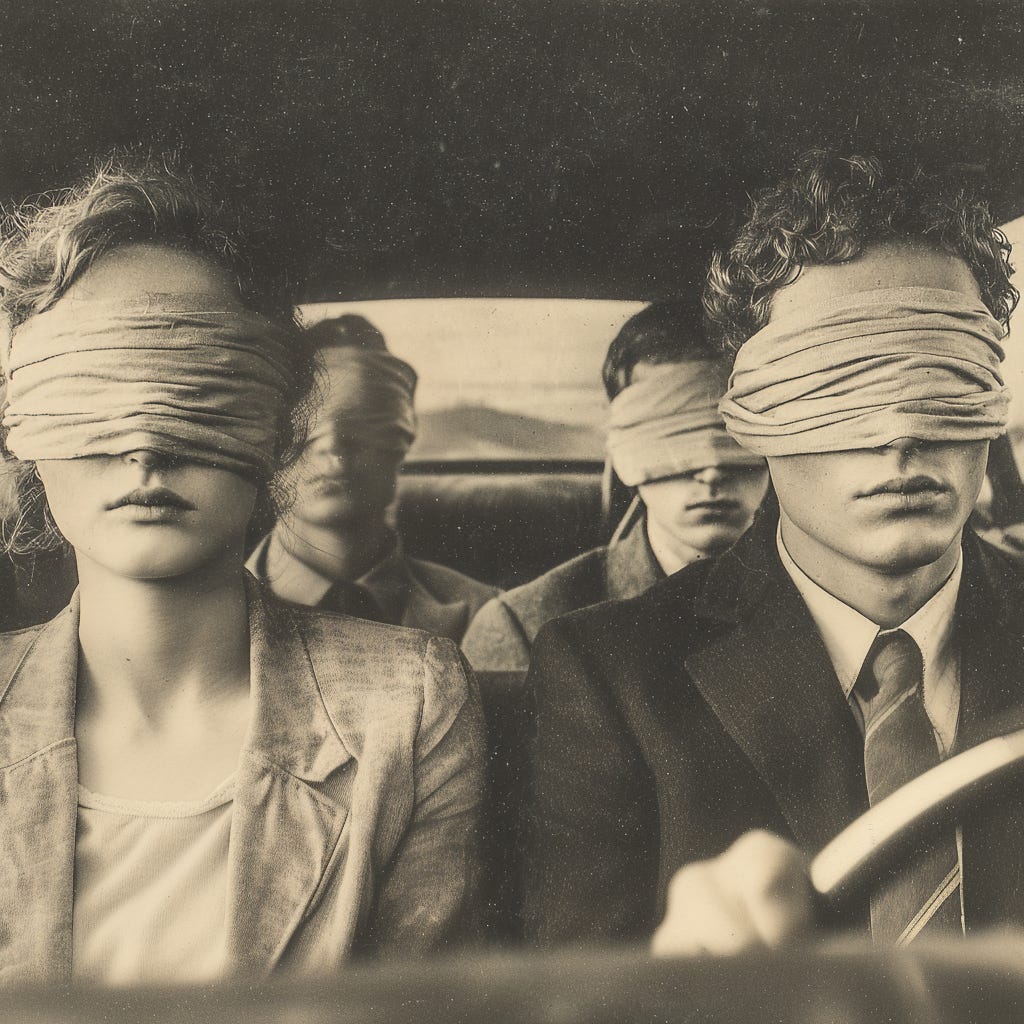
What is “the” value crisis? In contrast, a value crisis typically describes a condition in which a society wavers in its commitment to its established value system, often during periods of crisis or transformation. If a younger generation rebels against the values of a culture, conservatives would take this to be a value crisis. This potentially leads to polarization around the challenged values.3 But the value crisis at the heart of the metacrisis is a different beast altogether.
It is not that modern civilization is wavering in its commitment to a single, coherent, well-established value system. First, contemporary society is split between several value systems. Just as a religion can balkanize into sects, modern and especially postmodern value systems have fractured much more thoroughly, down into tiny, even individual, isolated islands. In other words, our value crisis is not characterized by wavering commitments, but by total fragmentation. But even this fragmentation is merely a symptom of the value crisis, which runs deeper still.
Coming closer to the core, we begin to see that not only have our value systems fragmented into smaller, insulated islands, but that their very justifications—their sources—have come unmoored. We not only have a plurality of incompatible value systems coexisting within a single society, but their justificatory roots are also under question (be these tradition, dogma, some rational system, etc.). Even deeper yet, the very nature of values, and even their very existence, stands precariously as an open question. All this, in a civilization determined to accelerate toward its goals—goals that are wholly defined, as we explored in Chapter 1, according to values.
In Chapter 1, we distinguished between lived and nominal values, as well as private and public values. Our phenomenological definition made room for both sets of values and their seeming contradictions in the same conversation. This shifts the center of gravity of a discussion about values from nominal, ideal values, such as freedom or equality, to include privately held, lived values such as power, respect, and comfort. This both expands value discourse and grounds it in the reality of human experience.
With this in mind, the value crisis at the heart of the metacrisis is recognized to be more than an issue of wavering commitments or a failure to adhere to noble ideals. It may be the case that we are failing to adhere to some noble ideals, but, more deeply, by admitting lived values alongside nominal values, the true significance of the value crisis comes into clearer view. It reveals: our civilization does not know where it is going. We do not know what is good, worthy, meaningful, or important. We do not even know how long we’ve been lost. And yet, we remain committed to acceleration nonetheless.
At the very least, in our fragmented, postmodern state, there is no consensus around these questions. Without higher-order synthesis of pluralism, without making productive use of friction, conflict, and disagreement, the contradictory forces threaten to tear society apart. Given enough power, the destruction won’t be limited to the social realm; existential risk is a real possibility.
The value crisis—a crisis of orientation—is at the heart of the metacrisis. It is the defining issue of our era, the culmination of historical processes that stretch back into the fog of our earliest history.
Awakening to The Value Crisis
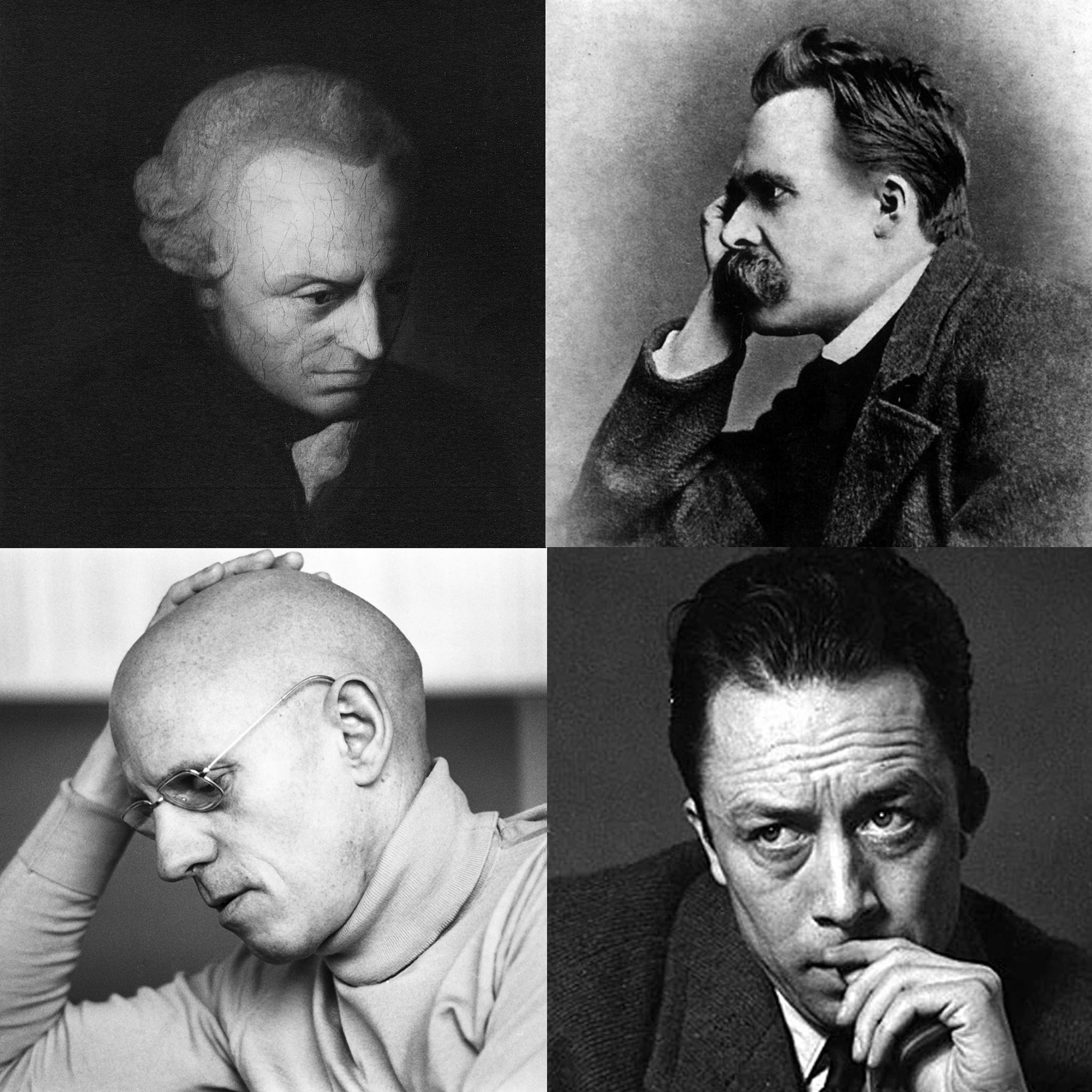
How to untangle the world knot that is the value crisis? Where to begin?
In The Gay Science (1882), Friedrich Nietzsche famously declared: “God is dead.” Unpacking this dramatic statement leads us straight into the existential abyss at the heart of our crisis.
Nietzsche was writing in the wake of the Enlightenment, voicing—while also personally grappling with—the ongoing disenchantment of Europe.
The European Enlightenment thinkers of the 17th and 18th centuries attempted to replace revelation with reason. They gradually came to reject their heritage—the Christian grand narrative—and with it, the Church’s cosmogony and metaphysics: its narrative of the world’s creation and its entire understanding of Reality. The European Enlightenment marked a radical shift in European society, with effects that were fated to reverberate throughout the planet.
The Enlightenment was a revolutionary project aimed at liberating individual thought, freed from the constraints of dogma and tradition, and remaking society in this liberated light. This movement’s avant-garde were the brilliant voices of a generation reclaiming a fuller vision of human existence.
Human beings are born into a particular historical moment and a preexisting socio-cultural story-world. But every received story-world has, itself, an origin story. The Enlightenment thinkers began to question their religious and feudal traditions, subjecting these to individual reason.
These “free” thinkers sought nothing less than to rewrite the story of humanity on a clean slate. Standing as they did between two worlds, one dying and one still in flux, naked and godless, did the Enlighteners liberate our capacity to think? Did they empower us to navigate the depths, ongoingly, competently, independent from lords and popes telling us good from evil? Or did they, ironically, leave us with a new set of dogmas to unshackle from?
“Reasonable” Values
Around the 18th century, thinkers such as Immanuel Kant, Jeremy Bentham, and John Stuart Mill sought to develop universal ethics derived from pure reason. Rejecting the notion of blindly following inherited moral rules not deducible from first principles, they sought a rational, universal moral code. Their highest aspirations were to unify humanity based on trans-cultural, secular, humanistic grounds.
While (gradually) coming to reject Christian explanations for a divine origin of the universe and ancient revelations as the source of morality, while trying to create rational justifications for cross-cultural ethical conduct, the Enlighteners inadvertently smuggled in their inherited values into their systems of thought. They sought purely rational roots for ethics. But why even try? Were they not already motivated to do so before any rational justifications were conceived? Were they not simply rationalizing what they already assumed to be good?
The Enlighteners are often retrospectively accused of “Jesus smuggling”—trying to retain the Christian values they were born into while simultaneously rejecting their dogmatic justifications.4 These values were now cut off from their roots, vulnerable. The Enlightenment sought to retain human dignity, equality, rights, freedoms, and obligations, while refuting the revealed transcendent divinity that had come to justify these ideals in Christian Europe. To this sleight of hand, Nietzsche proclaimed, as if to say, “Haven’t you noticed?”—“God is dead!” And did only Christian values sneak in through this oversight, or was there actually more that was smuggled in alongside Jesus? (This we will investigate in Part 2 of this series…)
The thinkers of the Enlightenment uprooted Western values, attempting to justify them based on reason rather than faith. Trying to create moral codes ex nihilo, propped up on pure reason, their ultrarational methodology made them blind to their own hidden motivations.5 And, without a wider context, without a shared understanding, with each person’s rationality rationalizing their own preferences, Western values were fated to fragment into free-floating islands of self-justifying individuals, “freed from dogma.”
Fragmentation
Around the same time as Nietzsche, Søren Kierkegaard was grappling with the same existential void left exposed by the Church’s declining hegemony. As a loyal Christian facing the onslaught, he called for a leap of faith—a reinvigoration of a more authentic religiosity: the single individual standing before God, rather than disappearing into a complacent crowd following institutions and social habits. Although they were living and working around the same time and peering down the same existential abyss, Nietzsche, more cynical toward Christianity, arrived at a radically different answer through his concept of the Übermensch (the Superman).
Nietzsche’s Übermensch is not and never was a tall, blond “Aryan” with perfect teeth. The Übermensch is a spiritual-ethical ideal, generating and living according to self-generated values and meaning, rather than relying on tattered cultural hand-me-downs. The Übermensch assumes the responsibilities for meaning- and value-making that their culture fumbled, not constructed through rational argumentation, but forged from pure willpower instead. Here was another attempt to bootstrap values directly from the individual.
After Kierkegaard and Nietzsche, more existentialist philosophers sought to grapple with the same void at the heart of a disillusioned, secularizing, and modernizing Europe after the so-called ‘death of God.’ In 20th-century post-religious Europe, following two World Wars, as this meaning vacuum threatened to consume the entire planet, Jean-Paul Sartre and Albert Camus both came to this territory, each arriving at very different responses.
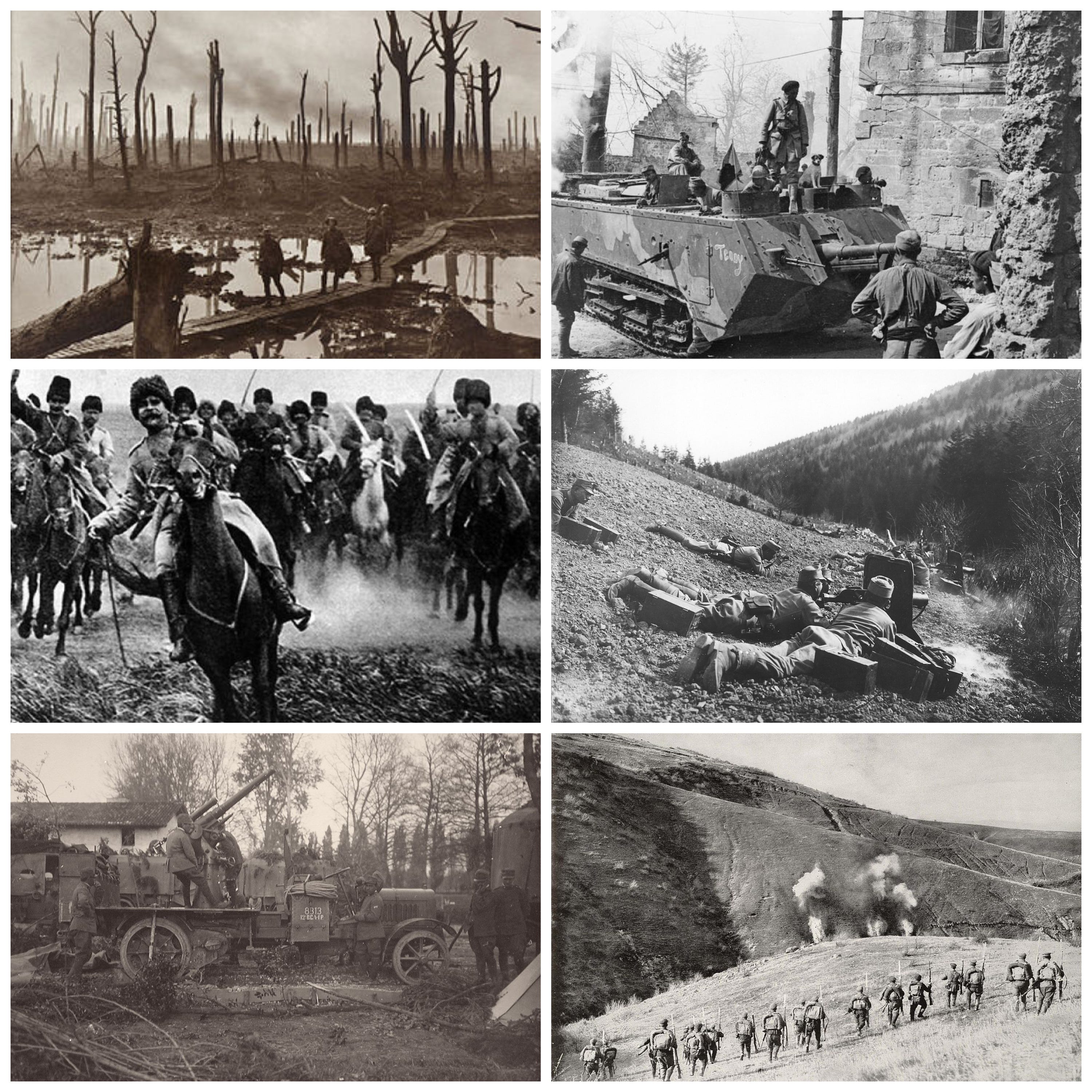
For Sartre, the ‘death of God’ was a given. Human beings, he argued, are thrown into an indifferent universe devoid of meaning. Echoing Nietzsche, he insisted that in a meaningless universe, humanity must invent its own meaning, choosing and self-creating its values.
Although agreeing on the premise—we are cast into a meaningless universe—Camus reached and espoused the very opposite. For Camus, bravery in the face of an irrational, meaningless universe means we must refuse both nihilism and the false consolation of fabricated meaning. Instead, we must embrace the dignity of revolt against the absurd—a defiance that dismisses meaning as if it were an infant’s pacifier—and learn to inhabit a meaningless universe with stoic resignation.
It is not difficult to see why later postmodern thinkers, such as Jacques Derrida and Michel Foucault, claimed that supposed values and meanings are mere façades for power hierarchies. Seen through this postmodern lens, the powerful fabricate a structure of meaning and value forged from their pure, selfish willpower, like Nietzsche’s Übermensch, to perpetuate a social order that serves their interests, covering over the underlying existential abyss; if meaning and values are fabricated ex nihilo, what remains is to investigate where the dominant sociocultural values originate and whom they serve.
Seen through this extreme postmodern lens, even countercultural value systems only arise as the weapons of the reformers, attempting to recreate the world, as cynically as those they supplant, now with themselves on top (an accusation Nietzsche leveled at early Christianity, or Jordan Peterson at so-called “neo-Marxist” teenagers and academics).
In postmodernism, values are merely fronts and tools for power games—cynically covering the self-interest of groups and individuals. Or they are infantile illusions that the true stoic learns to do without. Or they are blindly inherited and perpetuated. Or they are reduced to the least common denominator of utilitarian pleasure-seeking and discomfort-avoiding behavior. Is this not our present, fragmented value landscape in a disillusioned postmodernity?
Over the dead body of the Euro-Abrahamic God, individuals began rationalizing and self-constructing meaning and value in an inert, indifferent universe. Lacking a shared epistemology or a common context, without the deep cultural foundations required for healthy discourse, our values have fragmented—and the culture war rages on.
Where Does This Leave Us?
The death of the European God marked the loss of a shared world and the beginning of cultural fragmentation in Europe. When the responsibility for making sense of Reality shifted to individuals, communal and societal needs were made into an afterthought. These would now be accepted or rejected by the rational individual based on their personal proclivities.
Our newfound individualistic values—personal liberty, rights, fulfilment, authentic expression—might have been downright corrosive in other social arrangements, such as ancient city-states, feudal societies, or hunter-gatherer tribes. But unlike those societies, hyper-individualism is a necessary condition for consumer capitalism, where it is celebrated, encouraged, and reinforced.
Our values shifted from communal to individualistic. Selfish rather than altruistic. In The Wealth of Nations, Adam Smith famously argued that the self-interested actions of individual economic agents could move society toward stability and prosperity.6 Smith was not advocating for this kind of society, but rather articulated his perception of the budding capitalism of 18th-century England (even his amazement that it seems to function at all). But through him, the notion that a society can be stable and even thrive based on unadulterated self-interest was powerfully popularized. Smith’s report has been made to serve capitalism apologists and neoliberal ideologues since.
So, is individualistic fragmentation, perhaps, not an issue after all? To each their own, and all that. This is the libertarian ethos—live and let live. To an extent, this sentiment has some merit and, in some alternate, solipsistic universe where one’s actions have no impact on others, there may exist an actual libertarian society. Here on Earth, however, we are facing a metacrisis and, at the very least, an unprecedented need to coordinate on unprecedented scales. If Margaret Thatcher was wrong in asserting that “there is no such thing as society,” we may have to recenter the matter of values and subject them, along with the forces that shape them, to a more nuanced investigation after all.
Critically for our exploration, urgently given our situation, what are the risks of postponing a deeper exploration of values by papering over the existential void with more superficial stories? Of an unexamined accelerationism? We must face the open questions at the heart of the value crisis—if we wish to reorient before going over a cliff.
The Open Questions
We have seen the first question implied in Nietzsche’s announcement about the death of God. Now that we can no longer rest on unexamined dogma, seeing as we doubt that the stone tablets tell the whole story, where do our values come from? How do we justify them? What do they stand on?
Where Do Values Come From?
Whereas for medieval Europeans, God (through His Earthly representatives) simply dictated good from evil, a secular, rational West must ground values and meaning without appealing to dogma. This path has led, so far, to the postmodern fragmentation of values and meanings in an increasingly ‘wild’ West. Since losing the unifying, objective voice of God, values have become ungrounded outside of the individual subject, and are increasingly seen as arbitrary and relative.
The result? Cynicism, nihilism, and an inability to converse under a single roof of shared assumptions of value and meaning. This fragmentation is as true within the West itself as it is between the West and the East or between the North and the South. The only common denominator on which all seem to agree, the modern lingua franca of value, is money—the epitome of a reductive, flattening, instrumental, extrinsic approach to values—a number.
For the Western mind, bereft of an authority telling it what’s good or bad, right or wrong—a void filled by the secular social forces of mass media, the school, the state, and the economy—the question of moral sources lingers. If God is supposedly dead and every individual should make up their own rational mind about good and bad, what real alternative stands to postmodern fragmentation?
In Sources of the Self (1989), moral philosopher Charles Taylor traces the turbulent journey of the Western mind as it sought stable moral ground to stand on. Where do values come from? Where are they rooted? If not stemming from Plato’s logical ontology or Aristotle's telos, if not from God and scripture, then perhaps through the voice of Nature as it manifests through our desires, or from a cold, detached rationality that is our uniquely human endowment. The lost West has been scrambling for steady foundations. In our postmodern era, exhausted from all the flailing and having forgone consensus, the West resigns itself to self-gratification and escapism in a dead, meaningless universe.
Curiously, the question of moral or value sources, although not insignificant, seems to lead to many equivalence sets—fundamentally different starting points lead to similar conclusions. The mind attempts to rationalize one’s behaviors and values, and it needs some axioms for this purpose. But whichever source it draws on to justify its moral intuition, this intuition itself often leads toward similar conclusions stemming from different sources, or even arrives at different conclusions springing from the same axiom. What’s the difference between Mother Nature and Europe’s God, in this practical sense, if either can be used just as well to rationalize whatever morals or values one seeks to justify?
It’s almost as if the question of moral sources, ontological in nature, does not affect one’s moral universe. Taylor himself acknowledges as much in certain cases, but for him, moral sources serve to powerfully justify and energize one’s actions by corroborating one’s alignment with a higher principle. Be it God, Nature, or the spark of human rationality, each of these can seemingly be used to stabilize and empower one’s value system. Certainty is like rocket fuel. It does not indicate to someone that they are right; it is simply the boost of feeling right.
The Certainty of a Moral Source
Seen in this light, the question of moral sources plaguing the Western mind might very well be its desperate search for a lost sense of certainty. How resolute the sword that strikes the heathens when guided by God’s command! Or toward a rightful dictatorship of the proletariat, or a material utopia of technological progress through a truly free market! Release the chatbots!
Of course, we do not dismiss the significance that certainty has for propelling action (in Simplicity Complicity, we arrived at an existential stance for balancing epistemic humility and reasonable conviction). Beyond the death of certainty, the loss of a unifying metaphysical context has implications. But its absence does not seem to deny the possibility of sharing the same or similar value systems. Whatever name one uses to call (or deny) God, we can cooperate regardless, so long as we have the same values, or so this rationale goes.
For now, the supposed truth of any moral source, or absolute questions such as “Does God exist?” or “Is Nature intelligent?” is put aside, so that we can focus on values as such. Whatever may be reasonably said about such fundamental ontological questions at this historical moment, a post-postmodern value meta-system is first charged with bridging between communities in ontological disagreement. It sets aside the questions “Who is right?” and “What is true?” for one more urgent and accessible: “How can we cooperate while we do not know?”
It is the nature of explorations as broad as this that they stray from their intended boundaries. We set off to discuss values and find ourselves trespassing in ontological and metaphysical territory. For now, we will sweep God under the rug. If God does something sneaky like proclaiming “I am both under the rug and above the rug” or “I am the rug, the broom, and the sweeper,” we will ignore it for the moment to see how far we can get with our ontologically agnostic investigation of values.
In other words, though the rupture in Europe’s value system seems, at first glance, to originate with the death of God, we neither resurrect nor affirm God’s demise. We turn our attention, instead, to values as such.
However, this agnosticism must not hide the open question about the nature of values that remain. That is, what are values, objectively speaking? Are they objective?
The Objectivity of Values
What are values? Our definition captures an experiential aspect of values as the felt force fields that push and pull us toward or away from things in life. But the question remains whether values exist merely subjectively, or whether they are in some way independent of human experience. This is the fundamental ontological question about values: Are values entirely subjective, or do they have objective reality? In this series, we sidestep this ontological debate in favor of our phenomenological framing. Nevertheless, this question takes us to the heart of postmodern critique.
If values are objective, that would mean value conflicts have definite answers, one being right and the other wrong. But what if we have no access to objective Truth? What if our subjectivity is all that we have?
Modernism is a dialectical reaction to a particular context, namely, Christian Europe. In Christianity, like Judaism before it, values are distinctly objective. They are absolute truths revealed by an absolute deity, textually enshrined and embodied in rules, rituals, and obligations. These values are passed intergenerationally through religious dogma, and those not abiding by these true, God-given values must be excommunicated, or worse.
The Enlighteners challenged this dogmatic structure through individual free thought, attempting to establish rational value systems in its stead. Objective reason was now alleged to guarantee more rational, universally valid values than those blindly inherited by tradition. The superior rational process of the thinking individual, once freed from dogma, ensures that the values they arrive at are more reasonable than those of other cultures and of the past. The Enlighteners can’t trust scripture, but they can trust their own rationality. Values are presumed objective because they emerge by necessity from the objective process of reason itself. This objective process any rational thinker, in any context, ought to be able to reproduce.
Postmodern critique undercut this model—and the supposed objectivity of rationality itself. Modernism gave rise to humanistic, secular, individualistic values, elevating comfort, safety, leisure, and material progress. But these supposedly “universal” “objective” values are based on the contingent sociocultural context from which they arose. Postmodern critique reduces these supposedly objective modern values to a purely subjective status. It states that although they aimed for objective truths, the Enlighteners were oblivious to their inescapable subjectivity. Perhaps worse yet, they denied subjectivity through presumptions of objectivity. (See our previous essay—Thinking In Color.)
Postmodern thought goes as far as to claim that there are no objective values. All values are subjective human projections on an inherently valueless universe. Whatever you may hold as valuable, it is only so in your subjective perception, which is not real in any objective sense. This inescapable subjectivity of values leads to the next open question.
Value Pluralism
If values have an objective existence, then it may imply that they are to be discovered, not invented. But if values are merely subjective, then we must grapple with the very practical matter of different people or groups arriving at different, potentially incompatible, values. This is the open question of value pluralism.
Modernism is closed off to pluralism. It defined itself in opposition to dogmatic religion and assumes it is correct because it is rational and therefore objective. To this day, obsessed with optimizing for its “objective” metrics, modernity has no time or need for a reexamination of its rational values. Having arrived at objective values, it is safe to impose modern standards on the rest of the world through colonialism. As any good patriarch would, it must do what’s best for its children even if they are not rational enough to know, themselves, what’s good for them. The postmodern reaction to this dangerous hubris and its fallout is, therefore, historically understandable. It rejects any claim to value objectivity.
Value Relativism
Postmodernism opens, through the radical subjectivity of values, a landscape with as many legitimate value systems as there are people. In postmodernity, because these value systems rest only on the subjectivity of the individual, there is no objective basis from which to discriminate. Of course, people must assume their value system is better, or they would choose another; any attempt to discriminate between value systems rests on a subjective value system, after all. There’s no way out! This leads to postmodern relativism. It is pluralistic in the extreme; it refuses discrimination between different value systems, ultimately equating greed and generosity—both are reducible to subjective preferences, and nothing more.
Toward a Post-postmodern Pluralism
Modern assumptions of superiority are shallow—we are correct because we are more rational. Postmodern assumptions of relativism are not much better—nobody is correct, truth is an illusion; just do whatever. A post-postmodern value pluralism is tasked with addressing pluralism with greater nuance and surpassing the postmodern flatland toward a more constructive form of pluralism.
A New Value Discourse
These are the big, open questions at the heart of the value crisis—the source of values, the subjectivity and objectivity of values, postmodern fragmentation, value pluralism, and value discrimination and discernment. These open questions leave us disoriented; they outline the value crisis.
We need a post-postmodern value discourse. We are not scratching some fringe philosophical itch—whole societies and their people move according to their value systems. Individuals born into a culture inherit its value system, value sensibilities, and perceptions. In a way, it is astounding that both individuals and societies can move at all on sheer, blind momentum, not knowing where or why they are going.
Deliberate examination is the only antidote for the unexamined life. And whereas a life with unexamined values is not worth living, a whole society with unexamined values may have something worse in store. Lacking better answers to the big questions of the value crisis, humanity may seal its fate in the coming decades, wasting a precious window of opportunity to reorient in favor of acceleration toward its unexamined ends. All the limited resources and vitality of our planet may be wasted in our state of disorientation. This is where we are.
We are still riding the explosion, the chain reaction that has led to our modern world—Renaissance, printing press, Protestant Reformation, corporate capitalism, colonialism, the scientific and industrial revolutions, the rise of nation states and democracies, two World Wars, globalization, the digital revolution, neocolonialism, and, now, technofeudalism.7
All these transformations happened within a few short centuries. Is this ‘history’? Or is it more appropriate to think of these as current events, once we sufficiently widen our aperture?
And why so much concern for European values? Aren’t there other worlds of value to learn from? As we will explore in Part 2, what was incubated in Europe has since metastasized to the rest of the planet.
With microplastics at the snowy peaks of the Himalayas and toxic metals clogging our very tissues, we can rest assured—we cannot hide or escape from the child of Europe’s Enlightenment, modernity, now let loose on the entire planet.
Where Do We Go From Here?
Somewhere along the way, we dropped the ball. We lost track of what matters, alongside our capacity for self-determination.
How can we claw our way out of the meaning crisis? How do we navigate the metacrisis? How can we get to the bottom of the value crisis? And where do we rise to having reached the bottom?
We are chasing futures we do not want and see no alternatives. We dismissed the possibility of consensus and the potential of discourse. We even cast aside wisdom and our own capacity to discern and discriminate. Living in a universe where nothing, supposedly, matters, we cling to ever-shrinking scraps of meaning. We suppress our aspirational hopes lest we be ridiculed for our sappiness and childish naivety. We chase empty thrills to fill the void, victim-bonding over the toxic dregs of a lost civilization entertaining itself to oblivion.
Let us be the last lost generation. For those who come after, let us choose to become the pivot generation. Only a renaissance of values can reorient us, revealing up from down and good from bad. We need a new value discourse.
If nothing matters, neither does this essay. But only those half-alive in some catatonic state actually live without values. Like our stories, values are an inescapable aspect of human existence. Seen in this light, nihilism is revealed as utterly unattainable. Although having no values is not an option, shallow, unexamined values or confused, self-contradictory values serve as a second-best option to true, pure, unachievable nihilism.
No: gods or idols, justice and truth, or a strawberry cheesecake. Humans do have values. We don’t seem to have a choice, as values are the forces orienting us in this complex Reality. Even if one burns all their sacred ideals, some defaults or remnants seem to linger, moving them nevertheless. Though nihilism, as in the absence of values, is impossible, value ignorance is not.
If human existence is inescapably value-laden, then the task remains to confront and clarify our values. Not another reinvention of value systems ex nihilo, but the post-postmodern process of value clarification is what we are gesturing toward. Where can we expect to find ourselves on the other side of genuine value clarification? Can you intuit what may come to light? And what must change? A wiser civilization than ours would insist on clarifying this point before taking another single unexamined step—what is valuable?
We are gearing up to examine what moves us and to learn how we can engage with it deliberately. We may discover what truly matters. We may recall our capacity to discern the Good and the Beautiful. If we do, we will be empowered to unapologetically venture down wiser paths, moving with newfound confidence toward a future chosen with a historically unprecedented clarity.
To unshackle power from ignorant goals, to discern a truly beautiful future from a traumatic repetition, we call for post-postmodern value clarification and a new way of thinking and talking about values.
So that the West may truly become enlightened, so that the Enlightenment of the West can harmonize with the Enlightenment of the East, so that the North can dream together with the South, we embark on a journey of value clarification.
By grappling with the defining issue of our times—the value crisis—the metacrisis will reveal itself as a gift in disguise. May this revelation happen not one moment too late.
Coming soon in High Resolution—Value Harmonics Part 2: A Brief History of Values—where we will examine the genealogy of our values, excavate, and face our past, and the evolution of the modern value system that dominates our world. From this reckoning, a glimmer of hope may be stoked: a world of value alignment and an unprecedented chapter in human history, where we boldly move toward a future worth having.
Indeed, we wrote of the need to expand our capacity for grappling with complexity in Simplicity Complicity - Part 3. Also see Robert Kegan’s In Over Our Heads.
Technocracy is the idea that society should be managed by ‘professionals.’ That is, instead of a politician receiving a political appointment to mishandle some ministry, an expert should head the office. But although the ineptitude and corruption of the average politician make a better case for technocracy than any of its advocates, by the end of this series, it should be abundantly clear why it solves no problem worth solving.
Of course, conservatives of all varieties may indeed perceive the metacrisis in this way, recognizing at the heart of our social issues a value crisis. This would relate to a decline of the unifying pole of some well-established value system they happen to hold dear—perhaps the traditional values of religion, the liberal values of the Enlightenment, or simply nationalism. (We will return to the political divide later in the series.)
Secularization was a gradual process (and, of course, was never fully achieved). Many of the major contributors to the Enlightenment were religious, spiritual, or esoterically inclined in one way or another. Unapologetic, “disenchanted” atheism came late to the scene. See, for instance, Jason Ānanda Josephson Storm’s The Myth of Disenchantment for a deconstruction of the modern myth of mythlessness.
Thinking is a layered process, so to speak—overinvolvement with the surface level of thought obscures its deeper motivational undercurrents. Refer to our previous essay, Thinking in Color, for more on this point. It is only natural for rationality to serve one’s underlying values. Indeed, what else could it serve? But this contradicts the premise of projects to base morality or ethics on rational grounds, such as the Kantian approach.
Though he is often taken out of context to justify the most selfish manifestations of capitalism, in a world that did not yet have an idea of “economist,” Smith was a moral philosopher first and, in his first book, The Theory of Moral Sentiments, explicitly wrestled with the question: How can a fundamentally self-interested human being even have moral sentiments that put self-interest on one side of the scale with broader considerations on the other? At the very least, Smith grappled with these issues as a moral philosopher, not leaving them to chance.
Technofeudalism is essentially a particular form of corporocracy—that of digital platforms. More so, technofeudalism is an attempt to trace shifts in the rentier class and, through it, in class relations. See Yanis Varoufakis’s Technofeudalism.