
Thinking in Color - Part 2
Towards the Full Spectrum of Thought

Introduction
Motivation
The invisible line separating children from adults has nothing to do with age.
If we had to reduce maturity to a single defining characteristic, it would be emotional intelligence1.
Of course, maturation is more complex than that.
In ancient cultures, there were rites of passage and initiations into adulthood. These were cross-culturally ubiquitous in pre-agrarian societies. These ceremonies are absent from Western culture, which lacks clarity about what is expected of an adult.
On the whole, we claim that Western culture has lost connection with maturity and, losing that thread, is descending into juvenile escapism. This essay starts engaging with that claim and begins the long voyage back to the grounded sanity of maturity.
While maturation cannot be fully reduced to emotional intelligence, we claim that is where we must start, individually and culturally. Without emotional intelligence, we are unstable and unable to engage with further development and maturation when it happens to be challenging. And it is challenging.
This is why Thinking in Color is the first essay we’re publishing. We want to stabilize our capacity to think and the depth and relevance of that thought.
We in the West must confront the uncomfortable fact that we do not receive any meaningful foothold in maturity simply by getting our driver’s license. Because our culture is mostly blind to all this and defines adulthood as having something to do with external superficial parameters such as age, height, wrinkles, and white hair or paying one’s taxes on time, there is tremendous social confusion about authority.
Where Are The Adults?
Western society is maturity-blind, and we tiptoe around all the (physically) fully formed children. Therefore, culture itself is immature. And if we trace the roots of the meta-crisis, it leads right to this point. An immature society cannot wield as much power as ours does “sustainably” (often a euphemism for ‘non-suicidally’).
But in High Resolution, alongside solemn diagnosis, there is always a hopeful light that shines beyond the times of trouble ahead if we can metabolize our historical lessons.
Something in this territory we will be exploring is fundamental to shifting cultural discourse. Being able to ‘go there’ is a prerequisite for humanity to have a chance to survive and thrive beyond modernity. That doesn’t make all this any easier, but it does make it more straightforward and potentially doable.
So, the first stage in maturation is developing the emotional intelligence required to stabilize one’s experience for further development, and the first step in developing emotional intelligence is unquestionable: developing emotional self-awareness.
In this part of what was supposed to be a single essay and is shaping up to be an open-ended series, we will briefly discuss the social significance of emotional self-awareness in a population before delving into a practical discussion of this foundational human skill.
And skill is required to talk about emotionally charged topics. At this point in the human drama, after centuries of various kinds of social and cultural suppression of inconvenient elements of the human experience (sexuality, gender relations, power structures, emotions and their significance for sense-making, the so-called unconscious, humanity’s relationship to the rest of nature, spirituality, etc.), if it matters, you better know it’s emotionally charged.
But Before We Begin…
A Small Request
My AI editor is urging me to make my essay more accessible. Many references could be somewhat obscure to a general audience. While I agree that some references are obscure to some readers and some to other readers, I don’t think these should prevent anyone from trying to read my writing. My writing, at the moment, is more universal than what any obscure reference may imply.
And so, I wish to ask something of you as a reader. No reference, tangent, wink, or nod in this text is meant to dissuade you from reading it as if you’re not its audience. Assume that, whatever that piece may be, it was meant for someone else, and keep an open mind to the text itself being, nevertheless, for you.
If you do this and keep reading without feeling discouraged or alienated in those cases where something doesn’t land, it allows me more freedom to write in a broader conversation with many fields, which I feel is necessary for this kind of work that seeks to be embedded in a larger field of knowledge (and be challenged and refined through feedback from a wide variety of experts).
Of course, I encourage exploration instead of ignoring an unfamiliar reference. Especially if it stands out. Perhaps open a new tab on your browser for later.
Okay, now let’s begin by first recapping…
The Story So Far
If you haven’t already, consider reading Part 1. In it, we told a highly condensed story of the unresolved dialectic tension between emotions and thought in Western culture. In the story, we followed the evolution of the pure rationality ideal, which has been used to justify the state of this unresolved dialectic tension in the West.
We’ve also discussed how Western culture's lopsided dialectic position, which favors the content of thought as legitimate for the discourse in opposition to the subtler emotional dimension it is contrasted with, is out of step with the reality of the two being interweaving and co-informing dimensions of human experience. Thus, the pure rationality ideal perpetuates conflict and existential confusion within the Western person, their culture, and society.
In our streamlined historical narrative, we simplified the thinking of each era in Western history, though each had much more nuance and complexity.
To quickly recap, the story started in ancient Greece with the Greek Philosophers’ departure from the sophists’ method of persuasion toward the rational search for objective Truth.
We told how the Romans idolized the Greek culture and philosophy in their early republic, which became the more autocratic Roman Empire, which was salvaged as it collapsed in Western Europe by the rising Catholic Church, which was opposed by Western Enlightenment’s rationalism, which still broadly defines the modern Western perspective to this day.
During this entire movement, though manifested in different ways throughout the ages, the dialectic between reason and emotion remained polarized and biased towards an ideal of pure reason in Western culture.
We glossed over many nuances of the unfolding historical conversation and did not even mention the emergence of psychoanalysis on the scene as an early postmodern event, which is significant to the discussion. This began with Sigmund Freud in the late 19th century, who sought to bring the subconscious mind explicitly into discourse by applying the then-accepted tools of scientific investigation to subjective realms. The psychoanalytic project has done much to bring back the suppressed into discourse, but that is still an ongoing process, as this essay attests to.
Of course, a deeper historical exploration would be useful, but it would not fit in a short essay. Introducing too much content would make a larger project of what was only meant to ground us in the historical movement of our quarry in broad strokes. The past itself is not the issue. The past shapes our present, and so it is here with us, now and always. And we, at present, are still dealing with an unresolved issue in…
Our Own Historical Moment
The lopsided state of the dialectic in our own time results in an emotionally blind public discourse. This makes it immature. Supposedly rational positions are upheld by supposedly rational arguments while, underneath the surface, the emotional dimension tells the truth of the situation.
Egoic grasping to intellectual positions, an inability to critically examine ideological certainty, and mental rigidity all lead to an immobilized discourse and to dying democracies, which are now taking their final, shallow breaths. Cultural polarity intensifies around the loudest topic of the day while resentment continuously builds up, with not even a release valve to speak of.
The culture is not without evidence of an internal struggle around this lopsided dialectic. A culture war emerged with postmodernism challenging modernity from the polar opposite of the dialectic spectrum. This is exemplified by the work of French philosophers such as Michel Foucault, who, starting in the early 60s, challenged reason itself as an empty facade meant to justify the power structure’s legitimacy.
It is common sense to say there is no point in discussing politics or religion. In this cultural milieu, we tend to agree. There is no point in talking about any controversial or sensitive issue, oblivious to the problematic underlying dynamics. Instead, the underlying dynamics must be addressed first, which cannot be done under purely intellectual pretense.
Thus, the same unresolved dialectic tension persisted throughout history, bringing us to our current rationalistically lopsided position.
What are the Stakes?
The sophists of ancient Greece, experts in oratory and persuasion, often used their power to prey on the immature. Here, we claim that it was not the sophists’ approach but rather the immaturity itself that was the cultural situation to be addressed; the sophists were a symptom of a broader cultural issue. We relate to Plato’s frustrations around this issue (or was it Socrates?). But we also identify that the symptom—preying on the lack of self-knowledge of the populace—is worse now than ever before in history.
Freud’s nephew, Edward Bernays, was born in Vienna but grew up as an American in New York City. Starting in the early 20s, he sought to monetize his uncle’s insights about human nature, as any good industrious American in his position would. He appealed to the ‘unconscious’ of the masses through advertising campaigns meant to sell useless or harmful consumer products. He is often ‘credited’ as the father of modern propaganda. Edward Bernays sure would have rubbed Plato the wrong way (or was it Socrates?).
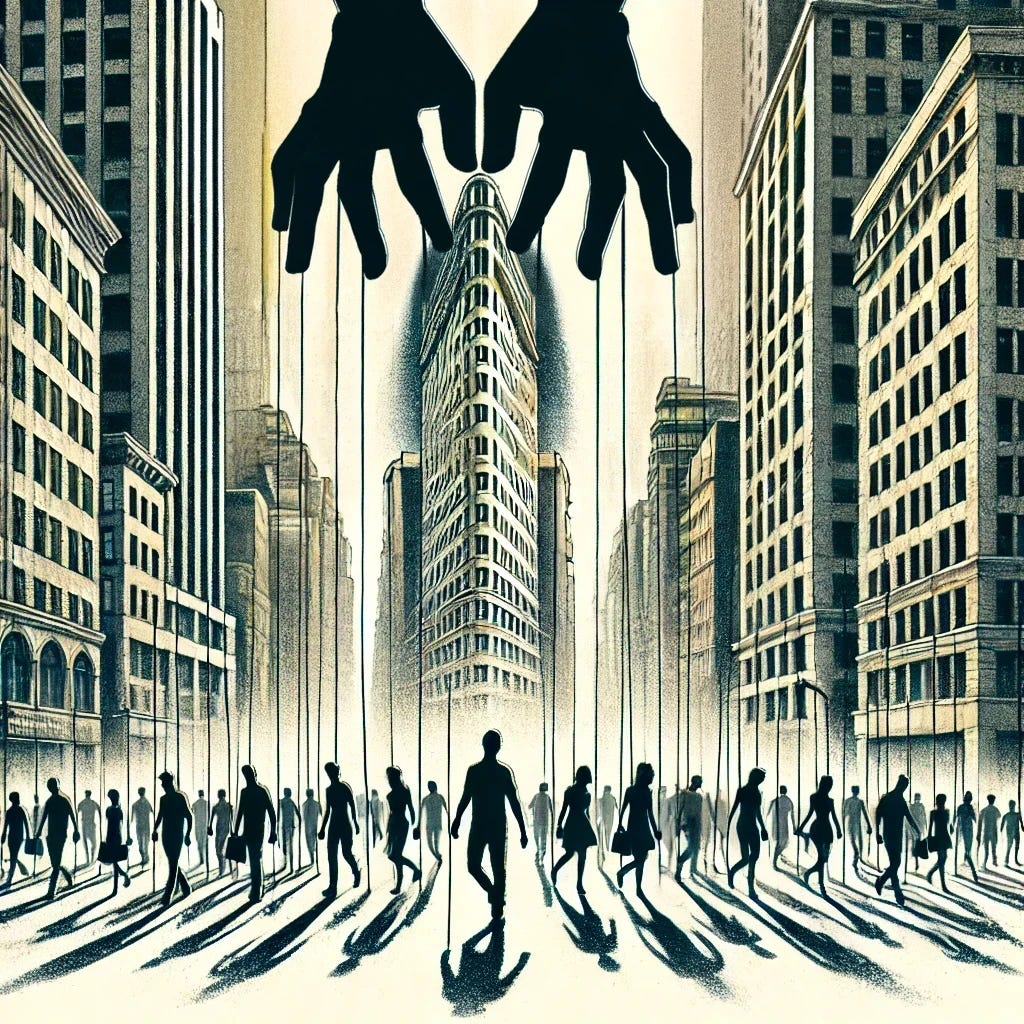
Some might argue that propaganda is endemic to all social structures, downplaying the uniqueness of our current predicament. They say that it has existed since the ancient empires of the Fertile Crescent, etched on Assyrian pillars and minted on coins since antiquity. What this flat objection fails to acknowledge is the same disparity in levels of self-awareness that was causing Plato’s distress (it might have been Socrates).
Of course, the gap has kept widening relentlessly since the 20s and has been integrated into modern and postmodern forms of media and social control. This is a different kind of (immaterial) wealth gap. Our power structures rely on the masses' malleability to maintain society's stability and mobilizability. This requires that the population lacks adequate means to see and examine the field in which the manipulation is taking place.
Therefore, the interests of modern society as it came to be are not aligned with the interests of its population. Maturity and independent thinking must be continuously sacrificed on the altar of social order, as warned by so many of the founding fathers (though, it can be argued, in a subtler dimension than what they were thinking about).
It can be claimed that modern Western society makes an honest attempt at managing and diffusing irrational energies through consumption and distractions (bread and circus, anyone?). However, this is an old model, and at its vile heart is the attempt to maintain a simple, predictable, and malleable population for the sake of the stability of the social order.
Many excuses and rationalizations are available to those who do not wish to engage with the line of inquiry we just opened up. How can we sort out immature reactivity from mature response? And that is the point. Instead of moving into the territory of systemic or potentially ‘conspiratorial’ questions, we must first turn to a practical discussion about the emotional landscape that undergirds our thinking.
Thinking in Color
First, we must notice that a difficulty emerges when one attempts to move towards nuance in a shallow culture. Instead, we are asked to…
Pick a Side!
We are talking about the Western mind while, for the most part, this essay will be encountered by a Western mind.
Because the Western mind is polarized around this dialectic, its encounter with this terrain is framed through that polarity; it ‘snaps’ to the familiar polarized interpretation. How does this play out?
If I critique the rational ideal, the polarized person’s unexamined reaction would be to interpret my position as if I am on the opposite side of the spectrum. One’s particular bias towards the rational side or the romantic side would serve to interpret whether I am ‘friend’ or ‘foe’; whether this argument serves the reader’s position or that of the enemy.
To exemplify this dynamic with a conversation about ‘economics’ (which is not entirely unrelated), note the reactivity that would lead some people to offhandedly dismiss the voices of those who question or criticize capitalism by labeling them (and interpreting them as) communists. In their mind, it is that simple. Capitalism VS. Communism. Pick a side and get off my lawn!
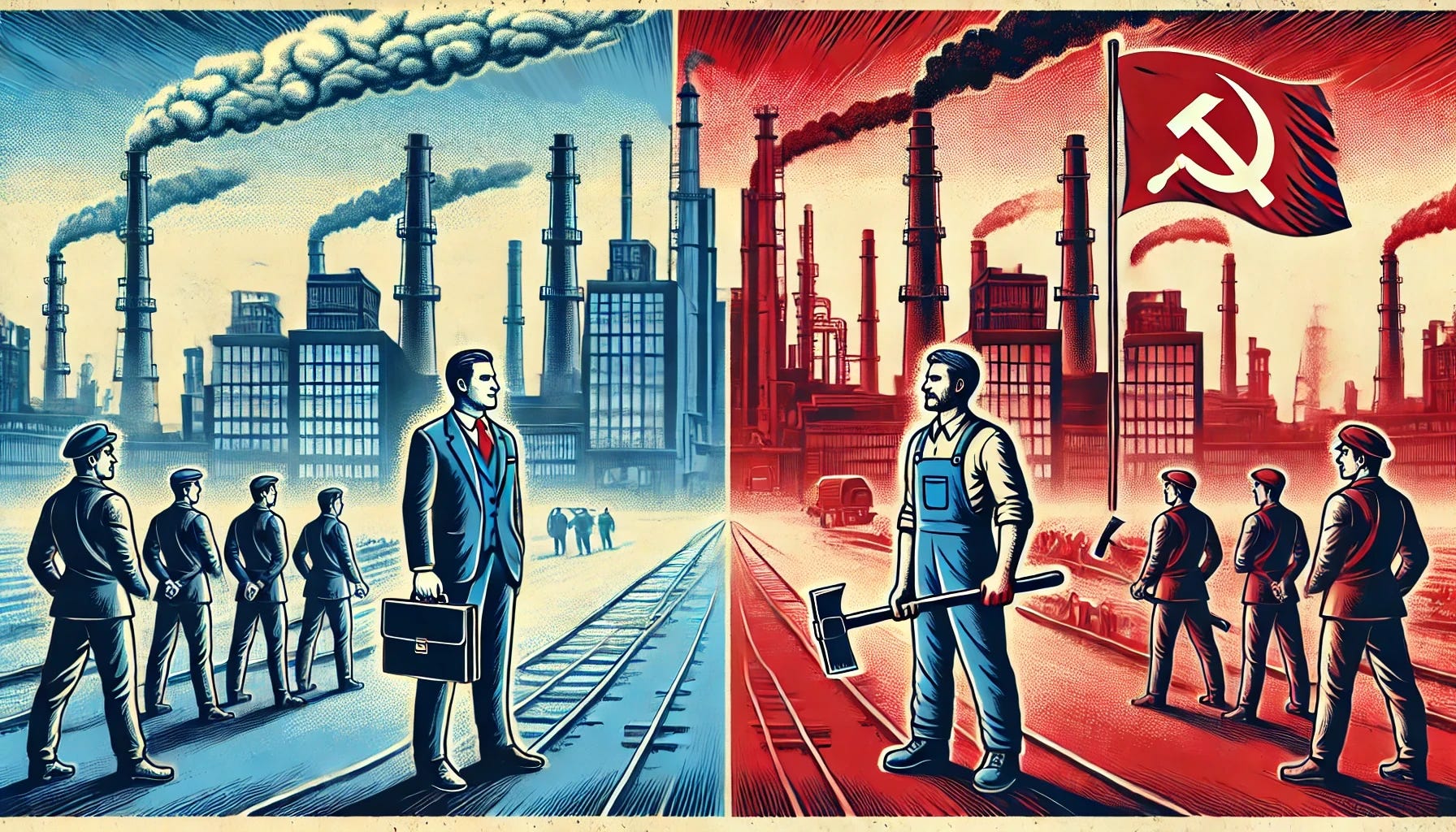
As will be made abundantly clear, in the ‘reason vs emotion’ war, we do not ascribe to either camp. Nor have we set out to establish a third camp. We seek to diffuse the dialectic tension by synthesizing it into a resolution.
And so, while we challenge the existential immaturity of the ideal of pure rationality, note how we are constructing a rational argument about it. Whoever would wish to accuse me of being an antirationalist enemy of the state will have difficulty building their case, as I will be self-consciously constructing a rational argument to counter (even though my argument would be recognizing the emotional ‘colors’ involved).
The pure rationality ideal would have us “self-regulate” emotions around other adults, seeing as emotional input has nothing to tell us about the situation other than signal our immaturity as a purely rational agent. This amounts to repression and turning a blind eye to our existential depths.
That does not mean we condemn rationality itself. Nor are we interested in idealizing emotions, emotional intelligence, or intuition in a way that mirrors the Western Enlightenment philosopher’s idealization of pure objective reason. Doing as much would dismiss the role and importance of rationality for our own present moment, and perpetuate the dialectic drama. We simply state that a rationality disembedded from emotional intelligence is immature, unreliable, and color-blind, lacking the self-reflectivity required for actual intelligence to emerge.
Likewise, we are not proposing a solution based on some wishy-washy ‘balanced’ attitude. Say, listen equally to the content of the mind and the emotions. Or, perhaps emotions get to control the person on Mondays, Wednesdays, and Fridays, reason controls the person on Sundays, Tuesdays, and Thursdays, and on Saturdays, the person can sit in the debilitating space of their constant bickering around a sad, cold dinner table.
The complexity of our historical moment demands that we navigate this terrain more carefully. There are no quick and easy fixes, but if we can make peace with that, we can start making genuine progress.
Synthesizing emotionality and rationality takes time and intentional effort because our culture largely misunderstands both domains.
In Practice
As Part 1 of this essay explores, the Western psyche is prone to fragmentation and compartmentalization.
Suppose we try to define an appropriate territory for emotions and an appropriate territory for rational discourse. In that case, we are liable to be frustrated by the seemingly obstinate emotional dimension’s unwillingness to ‘stick to the lines.’ There is no ‘proper’ zone in which we can cordon-off emotionality, as it seems to permeate the entire field of human experience, including those parts of it we would prefer to keep ‘strictly business.’
In this way, the Western mind is like an urbanite with OCD on a nerve-wracking trip to the countryside, feverishly trying to keep dirt, leaves, and insects out of the house to maintain a sense of 'cleanliness.' But nature keeps finding a way to sneak back in…
The emotional dimension of human experience is ubiquitous. That is why emotional intelligence is paramount. It’s not as if we have emotional situations at home and rational situations at work. That is the pure rationality myth of business-suits and professionalism. While it may serve to stabilize the social order of the corporate environment, it is also a pretense that misfits human nature and requires constant maintenance. It hides much more than it reveals, stagnating the existential maturation of developing human beings and avoiding a brave and uncomfortable examination of toxic social structures.
To engage with growing our emotional intelligence, which is relevant at all places and times, there is only one place we can start.
Self-Awareness
Emotions are an existential dimension of human existence; to honestly take on the full invitation of human existence, we must reckon with some intrinsic facets of human experience. We cannot not have emotions, and if some awkward transhuman hobgoblin manages to ‘solve’ the issue of emotions, as if to fulfill the now-prophetic myth of pure rationality, whatever that person becomes, they are most definitely no longer human, but some offshoot that has different existential questions to address than those of humanity.
So, we have our existential dimensions to contend with. But apparently, humans can spend much of their lives oblivious to these. Human beings can be more or less aware of the depths of their own experience and being. This is what the psychoanalytic ‘discovery’ of the unconscious pointed at.
Fortunately, self-awareness is something we can cultivate, develop, and refine. We must do this to progress towards the ideal of complete self-awareness.
There is variability in the depth of emotional self-awareness because there is depth to the emotional dimension itself. This is why emotional self-awareness is not a ‘thing’ someone either ‘has’ or ‘has not,’ but rather, a growing familiarity with one’s own ‘subtle spectrums.’
At first, one might be able to identify that they are feeling anger, loss, or joy. But to feel these more deeply and to recognize that these feelings themselves do not have a binary presence (yes or no), but rather, degrees and shades of presence, is a deepening of emotional self-awareness. The wealth of information available through this deepening and how far it goes cannot be overstated.
The emotional dimension is only one existential aspect of human life. Other dimensions have their corresponding awareness to cultivate. So, aside from emotional self-awareness, there is also somatic and mental self-awareness, alongside awareness in the context of any other realm of human experience (more subtle than these, for instance).
Because these dimensions are not disconnected departments but co-informing, interweaving dimensions of human experience, it is beneficial to approach the cultivation of self-awareness more holistically rather than assuming emotional self-awareness can be disjointed from somatic or mental self-awareness.
Academic models of emotional intelligence go beyond self-awareness to mention many aspects of emotional intelligence for which awareness is simply a prerequisite. However, there are sensitive issues with these models and certain considerations are absent from their fields of inquiry. For instance, even simple postmodern critique is still valid for notions of self-regulation, as a modernist understands it. For a modernist, self-regulation can mean something like “suck it up and get on with the program, bud,” which smuggles in normative assumptions and externally pre-interprets the significance of emotions for the human subject.
We sidestep academic models (or categories of models) of “EQ” or its broader cultural formulation and conclude that we agree with all these models about one thing—the unquestioningly primary role of emotional self-awareness.
And so, from wherever we look at it, we are called to courageously develop our self-awareness, even if it moves against the grain of cultural consensus.
To be Continued
We have identified our proposed entryway to reclaiming maturity in the West, on the individual level of analysis. In Part 3 of this essay series, we will go into the practical aspects of that journey.
This essay series is intended to situate the emotional dimension, not as a tool for go-getters to get an edge on the competition in their career, but as the obfuscated substratum of the cultural discourse that it is.
For High Resolution, cultivating emotional intelligence is about moving towards a wholeness of human existence, and the full range of implications of the existence of emotional intelligence to society and culture must be recognized and metabolized more explicitly.
This is the first step for this publication, although it was made in various ways by many others, it is simply where we must be getting started. Emotional intelligence, and its precursor, emotional self-awareness.
This is a challenging journey, but not without its rewards. We intend to be by your side every step of the way.
Stay tuned for our practical discussion on cultivating emotional self-awareness in Thinking in Color - Part 3.
I thank you from the bottom of my heart for your time and attention.
Later in the series we will propose an alternative term to emotional intelligence to better capture our meaning. For now, emotional intelligence suffices as a close approximation.